2-Methoxy-3(5 and 6)-isopropylpyrazine (CAS 25773-40-4) — Green Top to heart Note Fragrance Ingredient
2-Methoxy-3(5 and 6)-isopropylpyrazine
CAS 25773-40-4
What Is 2-Methoxy-3(5 and 6)-isopropylpyrazine?
2-Methoxy-3(5 and 6)-isopropylpyrazine is a synthetic aroma chemical that gives a powerful green, bell pepper-like note. It’s found in trace amounts in some fruits and vegetables, but the synthetic version is used in perfumery and flavoring. This ingredient matters because it provides an ultra-realistic vegetal effect at extremely low concentrations, making it invaluable for creating lifelike green accords.
Safety Profile
USE WITH AWARENESSWhat Does 2-Methoxy-3(5 and 6)-isopropylpyrazine Smell Like?
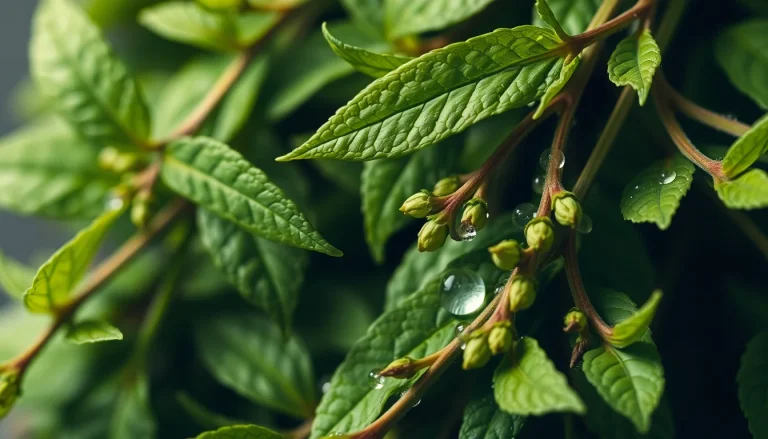
A razor-sharp green note that bursts with the crunchy freshness of just-cut bell peppers. The initial impact is almost aggressively vegetal, like snapping a green bean in half, which gradually softens into a more rounded, earthy sweetness reminiscent of fresh pea pods. At ultra-dilution, it takes on a surprisingly elegant character – think dewy morning grass rather than grocery store produce.
In Famous Fragrances
Fragrance associations may not reflect actual formulations.
Used to create the hyper-realistic green mango accord, contributing to the fragrance’s signature ‘just-picked’ freshness that makes the fruity notes smell alive rather than candy-like.
Provides the crisp opening vegetal nuance that bridges the citrus top to violet leaf heart, giving the impression of morning dew on fresh-cut grass.
2D Molecular Structure
SMILES: COC1=C(N=CC=N1)C(C)C
Chemistry, Properties & Perfumer Guide
The Chemistry
This pyrazine derivative belongs to a class of heterocyclic compounds known for their extremely low odor thresholds (often detectable at parts per billion). The methoxy and isopropyl groups flanking the pyrazine ring create steric hindrance that contributes to the molecule’s stability and persistence. Synthesized through nucleophilic substitution reactions on halopyrazines, its production requires careful control to avoid unwanted side products with more aggressive burnt/roasted characters.
Physical & Chemical Properties
| Boiling Point | Not publicly documented |
|---|---|
| Density | Not publicly documented |
Perfumer Guide
| Application | Typical % | Range | Notes |
|---|---|---|---|
| Fine Fragrance | 0.001-0.01% | Up to 0.1% | Extremely powerful – usually used in ppm concentrations |
| Functional Fragrance | 0.0005-0.005% | Up to 0.05% | For green fabric softener notes |
| Flavor | 0.5-5 ppm | Up to 10 ppm | For vegetable flavors |
Classic Accords
Tip: Always pre-dilute to at least 1% before incorporating into blends due to overwhelming strength.
Alternatives & Comparisons
When a slightly more earthy, less sharp green character is needed. Found naturally in green coffee beans and bell peppers.
Safety, Regulatory & Sustainability
⚠ Regulatory Disclaimer
General reference only. Consult current IFRA Standards Library before formulating.
IFRA Status
Not currently restricted by IFRA.
RIFM Assessment
RIFM has evaluated similar pyrazine compounds but no specific assessment found for this isomer.
Sustainability
Synthetic production avoids agricultural land use but requires petrochemical feedstocks. The extreme potency means very small quantities are needed, reducing overall environmental impact compared to less powerful green ingredients.
Explore 2-Methoxy-3(5 and 6)-isopropylpyrazine
Browse essential oils and aroma compounds.
Browse on iHerb →Affiliate disclosure: we may earn a small commission at no extra cost to you.
References
- Maga, J.A. (1982). Pyrazines in Foods: An Update. CRC Critical Reviews in Food Science and Nutrition. DOI: 10.1080/10408398209527350
Data: PubChem (NIH), PubMed, RIFM, IFRA. Last reviewed: Apr 2026.
Report a data errorIngredient Data Sheet
CAS 25773-40-4Physical Properties
| Molecular Weight | 152.19 g/mol🔬 PubChem |
| LogP (Octanol-Water) | 2🔬 PubChem |
| Boiling Point | 120 °C🔬 EPA CompTox |
| log Kp (skin permeability) | -2.208💻 Calculated |
| SMILES | CC(C)C1=NC=CN=C1OC🔬 PubChem |
Volatility & Performance
| Fragrance Note | Top💻 Calculated |
Odor & Flavor
| Primary Descriptors | earthy• leffingwell |
| Functional Groups | etheraromatic💻 RDKit |
| 2-Methoxy-3(5 and 6)-isopropylpyrazine has an earthy, bell pepper, raw potato, galbanum aroma.📖 Fenaroli | |
Sensory Thresholds
| Odor Detection Threshold | 0 ppm (n=14)📖 van Gemert |
Physical data: PubChem (NIH/NLM), U.S. EPA CompTox Dashboard, EPA OPERA models, RDKit. Odor & flavor: Arctander (Perfume & Flavor Chemicals), Fenaroli's Handbook of Flavor Ingredients, Leffingwell. Thresholds: van Gemert (Compilations of Odour Threshold Values). Regulatory: IFRA Standards 51st, FEMA GRAS. Trade names: Surburg (Common Fragrance & Flavor Materials). All data compiled and cross-referenced for perfumertools.com.
Physicochemical Properties
DTXSID: DTXSID4067147
Physical Properties
| Molecular Weight | 152.197 g/mol🔬 EPA CompTox |
| Density | 1.01 g/cm^3🔬 EPA CTX |
| Boiling Point | 197.955 °C📊 OPERA |
| Melting Point | 20.771 °C📊 OPERA |
| Flash Point | 74.335 °C📊 OPERA |
| Refractive Index | 1.489 Dimensionless📊 OPERA |
| Molar Volume | 149.956 cm^3/mol📊 OPERA |
Partition & Solubility
| LogP (Octanol-Water) | 2.002 Log10 unitless📊 OPERA |
| LogD (pH 5.5) | 2.002 Log10 unitless📊 OPERA |
| LogD (pH 7.4) | 2.002 Log10 unitless📊 OPERA |
| LogKoa (Octanol-Air) | 4.97 Log10 unitless📊 OPERA |
| Water Solubility | 0.079 mol/L📊 OPERA |
| Henry's Law Constant | 0 atm-m3/mole📊 OPERA |
Transport Properties
| Vapor Pressure | 0.192 mmHg📊 OPERA |
| Viscosity | 3.835 cP📊 OPERA |
| Surface Tension | 35.081 dyn/cm📊 OPERA |
| Thermal Conductivity | 130.532 mW/(m*K)📊 OPERA |
Molecular Descriptors
| Topological Polar Surface Area | 35.01 Ų💻 Computed |
| H-Bond Donors | 0 count💻 Computed |
| H-Bond Acceptors | 3 count💻 Computed |
| Rotatable Bonds | 2 count💻 Computed |
| Aromatic Rings | 1 count💻 Computed |
| Molar Refractivity | 43.299 cm^3/mol📊 OPERA |
| Polarizability | 17.165 Å^3📊 OPERA |
Data Sources:
🔬 EPA Experimental data from U.S. EPA CompTox Chemicals Dashboard & CTX APIs. 📊 OPERA Predicted using EPA's OPERA QSAR models. 💻 Computed Calculated from SMILES using RDKit.
Related Research
- 2-Undecanol (CAS 1653-30-1) — Citrus Top/Middle Note Fragrance Ingredient
- 1-(5-Ethyl-5-methyl-1-cyclohexen-1-yl)-4-penten-1-one (CAS 1393645-32-3) — Woody Middle Note Fragrance Ingredient
- Tricyclo[3.3.1.1.(3.7)]decan-2-ol, 4-methyl-8-methylene- (CAS 122760-84-3) — Woody Base Note Fragrance Ingredient
- 1-Methylnaphthalene (CAS 90-12-0) — Balsamic Base Note Fragrance Ingredient