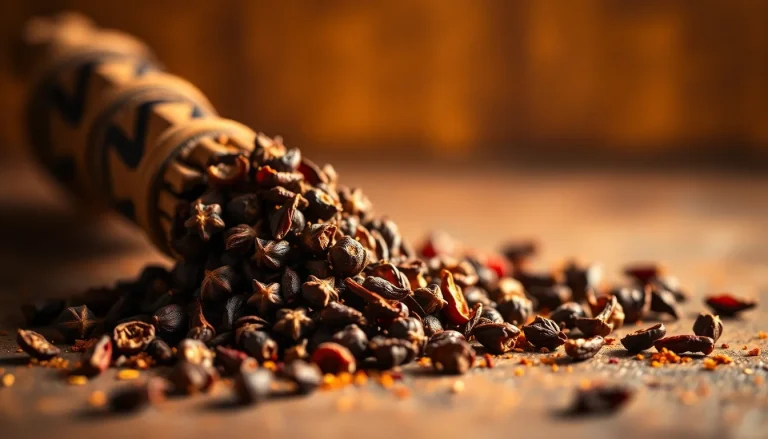
2-Methoxy-4-vinylphenol (CAS 7786-61-0) — Balsamic Middle Note Fragrance Ingredient
2-Methoxy-4-vinylphenol
CAS 7786-61-0
What Is 2-Methoxy-4-vinylphenol?
2-Methoxy-4-vinylphenol is a synthetic fragrance molecule that imparts a smoky, clove-like aroma. It’s found in some perfumes and flavored products. This ingredient adds depth and warmth to fragrances, often used to create spicy or woody accords.
Safety Profile
USE WITH AWARENESSWhat Does 2-Methoxy-4-vinylphenol Smell Like?
2-Methoxy-4-vinylphenol delivers an intense smoky character with pronounced clove-like spiciness. The initial burst is phenolic and medicinal, evolving into a warm, woody heart with hints of vanilla-like sweetness. The dry-down reveals a persistent balsamic quality that lingers close to the skin.
2D Molecular Structure
SMILES: COC1=C(O)C=CC(C=C)=C1
Chemistry, Properties & Perfumer Guide
The Chemistry
2-Methoxy-4-vinylphenol is a phenolic compound with a vinyl group at the para position relative to the methoxy substituent. It’s synthesized through alkylation of guaiacol or related phenolic precursors. The molecule’s planar structure allows strong interaction with olfactory receptors.
Physical & Chemical Properties
| Boiling Point | Not available |
|---|---|
| Density | Not available |
Perfumer Guide
| Application | Typical % | Range | Notes |
|---|---|---|---|
| Fine Fragrance | 0.1-0.5% | Up to 1% | Used as a modifier |
| Functional Fragrance | 0.05-0.2% | Up to 0.5% | For smoky accents |
Classic Accords
Tip: Use sparingly to avoid overwhelming compositions with phenolic character.
Alternatives & Comparisons
Safety, Regulatory & Sustainability
⚠ Regulatory Disclaimer
General reference only. Consult current IFRA Standards Library before formulating.
IFRA Status
No specific IFRA restrictions.
RIFM Assessment
Limited safety assessment available.
Sustainability
As a synthetic material, production involves petrochemical feedstocks. No known environmental concerns at typical usage levels.
Explore 2-Methoxy-4-vinylphenol
Browse essential oils and aroma compounds.
Browse on iHerb →Affiliate disclosure: we may earn a small commission at no extra cost to you.
Ingredient Data Sheet
CAS 7786-61-0Physical Properties
| Molecular Weight | 150.17 g/mol🔬 PubChem |
| LogP (Octanol-Water) | 2.4🔬 PubChem |
| Boiling Point | 265 °C🔬 EPA CompTox |
| Vapor Pressure | 0.0069 mmHg @ 25°C📊 OPERA |
| Flash Point | 111.3 °C🔬 EPA CompTox |
| Involatility Index | 0.0006💻 Calculated |
| log Kp (skin permeability) | -1.912💻 Calculated |
| SMILES | COC1=C(C=CC(=C1)C=C)O🔬 PubChem |
Volatility & Performance
| Fragrance Note | Heart💻 Calculated |
| Volatility Class | Very slow💻 Calculated |
| Persistence Score | 3.4 / 5💻 Calculated |
Odor & Flavor
| Primary Descriptors | smokyspicysweet• leffingwell |
| Functional Groups | phenoletheralkenearomatic💻 RDKit |
| “Powerful, spicy, Clove-like odor with a penetrating, warm, but also somewhat tarry undertone and good tenacity. It is considerably more diffusive than iso-Eugenol or Vanillin, but not quite as tenacious and not nearly as delicate.”📖 Arctander | |
| 2-Methoxy-4-vinylphenol has a powerful, spicy, apple, rum, roasted peanut aroma.📖 Fenaroli | |
Flavor Notes (Arctander)
| “This phenolether has found some use in flavor compositions, mainly in imitation Vanilla, Coffee, Cocoa, etc. where the power and radiation of the Aroma come to good effect.”📖 Arctander |
Sensory Thresholds
| Odor Detection Threshold | 0.008 ppm (n=6)📖 van Gemert |
Regulatory Status
| FEMA Number | FEMA 2675⚖️ FEMA GRAS |
| GRAS Status | Generally Recognized as Safe⚖️ FEMA GRAS |
| IOFI Classification | Nature Identical📖 Fenaroli |
Physical data: PubChem (NIH/NLM), U.S. EPA CompTox Dashboard, EPA OPERA models, RDKit. Odor & flavor: Arctander (Perfume & Flavor Chemicals), Fenaroli's Handbook of Flavor Ingredients, Leffingwell. Thresholds: van Gemert (Compilations of Odour Threshold Values). Regulatory: IFRA Standards 51st, FEMA GRAS. Trade names: Surburg (Common Fragrance & Flavor Materials). All data compiled and cross-referenced for perfumertools.com.
Physicochemical Properties
DTXSID: DTXSID7052529
Physical Properties
| Molecular Weight | 150.177 g/mol🔬 EPA CompTox |
| Density | 1.093 g/cm^3🔬 EPA CTX |
| Boiling Point | 252.525 °C📊 OPERA |
| Melting Point | 27 °C🔬 EPA CTX |
| Flash Point | 104.711 °C📊 OPERA |
| Refractive Index | 1.578 Dimensionless📊 OPERA |
| Molar Volume | 137.813 cm^3/mol📊 OPERA |
Partition & Solubility
| LogP (Octanol-Water) | 2.117 Log10 unitless📊 OPERA |
| LogD (pH 5.5) | 2.117 Log10 unitless📊 OPERA |
| LogD (pH 7.4) | 2.107 Log10 unitless📊 OPERA |
| LogKoa (Octanol-Air) | 7.73 Log10 unitless📊 OPERA |
| Water Solubility | 0.02 mol/L📊 OPERA |
| Henry's Law Constant | 0 atm-m3/mole📊 OPERA |
Transport Properties
| Vapor Pressure | 0.011 mmHg📊 OPERA |
| Viscosity | 4.438 cP📊 OPERA |
| Surface Tension | 38.581 dyn/cm📊 OPERA |
Molecular Descriptors
| Topological Polar Surface Area | 29.46 Ų💻 Computed |
| H-Bond Donors | 1 count💻 Computed |
| H-Bond Acceptors | 2 count💻 Computed |
| Rotatable Bonds | 2 count💻 Computed |
| Aromatic Rings | 1 count💻 Computed |
| Molar Refractivity | 45.737 cm^3/mol📊 OPERA |
| Polarizability | 18.132 Å^3📊 OPERA |
Data Sources:
🔬 EPA Experimental data from U.S. EPA CompTox Chemicals Dashboard & CTX APIs. 📊 OPERA Predicted using EPA's OPERA QSAR models. 💻 Computed Calculated from SMILES using RDKit.