Apricot absolute (CAS 72869-69-3) — Sweet Middle Note Fragrance Ingredient
Apricot absolute
CAS 72869-69-3
What Is Apricot absolute?
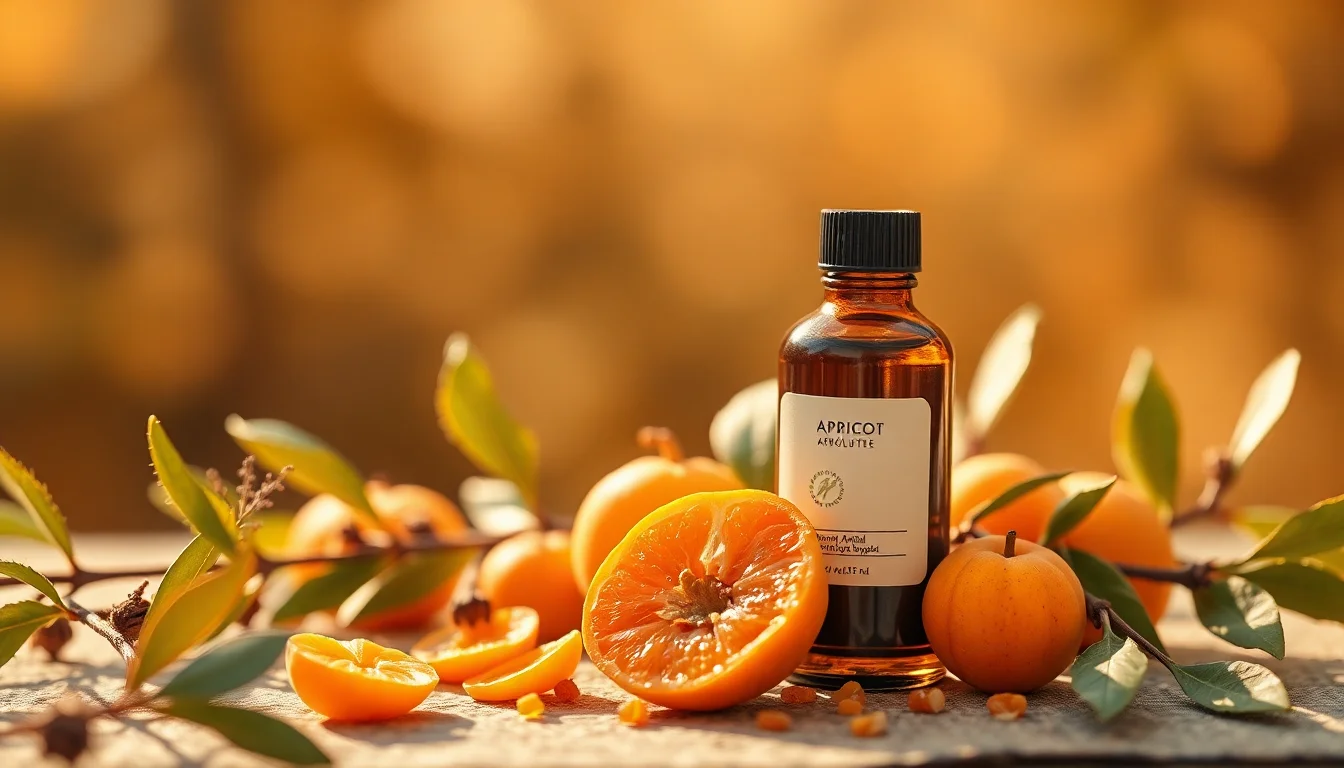
Apricot absolute is a luxurious fragrance material extracted from apricot kernels. People encounter it in high-end perfumes, gourmand fragrances, and some skincare products. This ingredient matters because it captures the essence of ripe apricots – both the fruity sweetness and the subtle almond-like depth from the kernels. It adds a natural, comforting dimension to fragrances.
Safety Profile
USE WITH AWARENESSWhat Does Apricot absolute Smell Like?
Apricot absolute unfolds with an immediate burst of sun-warmed stone fruit – jammy, honeyed apricot flesh with a hint of peach-like roundness. As it evolves, a delicate almond nuance emerges from the kernel, adding sophistication. The dry-down reveals a soft, slightly powdery character reminiscent of orris root, with lingering fruity sweetness balanced by a subtle woody-herbaceous undertone. The overall effect is like biting into a perfectly ripe apricot on a summer day, with all its juicy complexity.
In Famous Fragrances
Fragrance associations may not reflect actual formulations.
Apricot absolute amplifies the lush stone fruit character, blending with peach and patchouli for an ultra-decadent effect. Its almond nuance bridges the gap between the fruity top and woody base.
Used sparingly here to add a soft frucy counterpoint to the violet and iris, creating an impression of rain-kissed fruit blossoms.
Apricot absolute forms the core of this fragrance, blending with peach and musk to recreate the sensation of sun-warmed peach skin.
Provides a frucy lift to the cedarwood heart, softening the woody notes with its jammy sweetness.
Apricot absolute contributes to the sun-drenched Mediterranean orchard impression, blending with fig leaf and citrus.
Chemistry, Properties & Perfumer Guide
The Chemistry
Apricot absolute is obtained through solvent extraction of Prunus armeniaca kernels. It contains benzaldehyde derivatives (responsible for the almond note), along with various fatty acids and lactones that contribute to the fruity character. The exact composition varies based on cultivar and extraction method. Key aroma compounds include γ-decalactone (peach-like) and benzyl alcohol. Unlike apricot kernel oil, the absolute captures both volatile aromatic compounds and heavier odorants.
Physical & Chemical Properties
| Appearance | Viscous orange-brown liquid |
|---|---|
| Solubility | Soluble in alcohol and oils |
Key Constituent Properties
| Constituent | CAS | MW | BP °C | XLogP | Vapor P. |
|---|---|---|---|---|---|
| Benzaldehyde | 100-52-7 | 106.12 | 178 | 1.48 | 1.3 mmHg |
| γ-Decalactone | 706-14-9 | 170.25 | 281 | 3.3 | 0.001 mmHg |
Perfumer Guide
| Application | Typical % | Range | Notes |
|---|---|---|---|
| Fine Fragrance | 0.5-2% | Up to 5% | Used for frucy accents |
| Gourmand Fragrances | 1-3% | Up to 7% | Enhances edible qualities |
| Skincare Products | 0.1-0.5% | Up to 1% | Adds subtle fruity notes |
Classic Accords
Tip: Combine with ionones to enhance the jammy character or with benzaldehyde to emphasize the almond aspect.
Alternatives & Comparisons
For a more straightforward peach note without the almond complexity. Higher impact at lower concentrations.
When only the almond character is desired. Much more volatile and requires fixation.
Safety, Regulatory & Sustainability
⚠ Regulatory Disclaimer
General reference only. Consult current IFRA Standards Library before formulating.
IFRA Status
No IFRA restrictions. Contains naturally occurring benzaldehyde which is restricted at higher concentrations.
EU Allergen Declaration
Contains benzaldehyde which requires declaration above 0.001% in leave-on products.
GHS Classification
RIFM Assessment
Considered safe at current usage levels based on RIFM evaluation of benzaldehyde content.
Sustainability
Apricot absolute is a byproduct of the food industry, utilizing kernels that would otherwise be discarded. However, yield is low (about 0.5-1% of kernel weight), making it relatively expensive. Some producers are developing more efficient extraction methods to improve sustainability. Synthetic alternatives exist but lack the full complexity of the natural material.
Explore Apricot absolute
Browse essential oils and aroma compounds.
Browse on iHerb →Affiliate disclosure: we may earn a small commission at no extra cost to you.
References
- Burdock, G.A. (2010). Fenaroli’s Handbook of Flavor Ingredients. CRC Press. ISBN 9781420090772
Data: PubChem (NIH), PubMed, RIFM, IFRA. Last reviewed: Apr 2026.
Report a data errorIngredient Data Sheet
CAS 72869-69-3Physical data: PubChem (NIH/NLM), U.S. EPA CompTox Dashboard, EPA OPERA models, RDKit. Odor & flavor: Arctander (Perfume & Flavor Chemicals), Fenaroli's Handbook of Flavor Ingredients, Leffingwell. Thresholds: van Gemert (Compilations of Odour Threshold Values). Regulatory: IFRA Standards 51st, FEMA GRAS. Trade names: Surburg (Common Fragrance & Flavor Materials). All data compiled and cross-referenced for perfumertools.com.
Related Research
- Isopentylamine (CAS 107-85-7) — Musky N/A Note Fragrance Ingredient
- beta-Ionone (CAS 14901-07-06) — Floral Heart Note Fragrance Ingredient
- 4,7-Methano-1H-inden-5-ol, octahydro-3,4,5-trimethyl- (CAS 1340502-69-3) — Woody Base Note Fragrance Ingredient
- 1,1-Diethoxydecane (CAS 34764-02-08) — Green Top Note Fragrance Ingredient