Geranium absolute (CAS 8000-46-2) — Floral Heart to base Note Fragrance Ingredient
Geranium absolute
CAS 8000-46-2
What Is Geranium absolute?
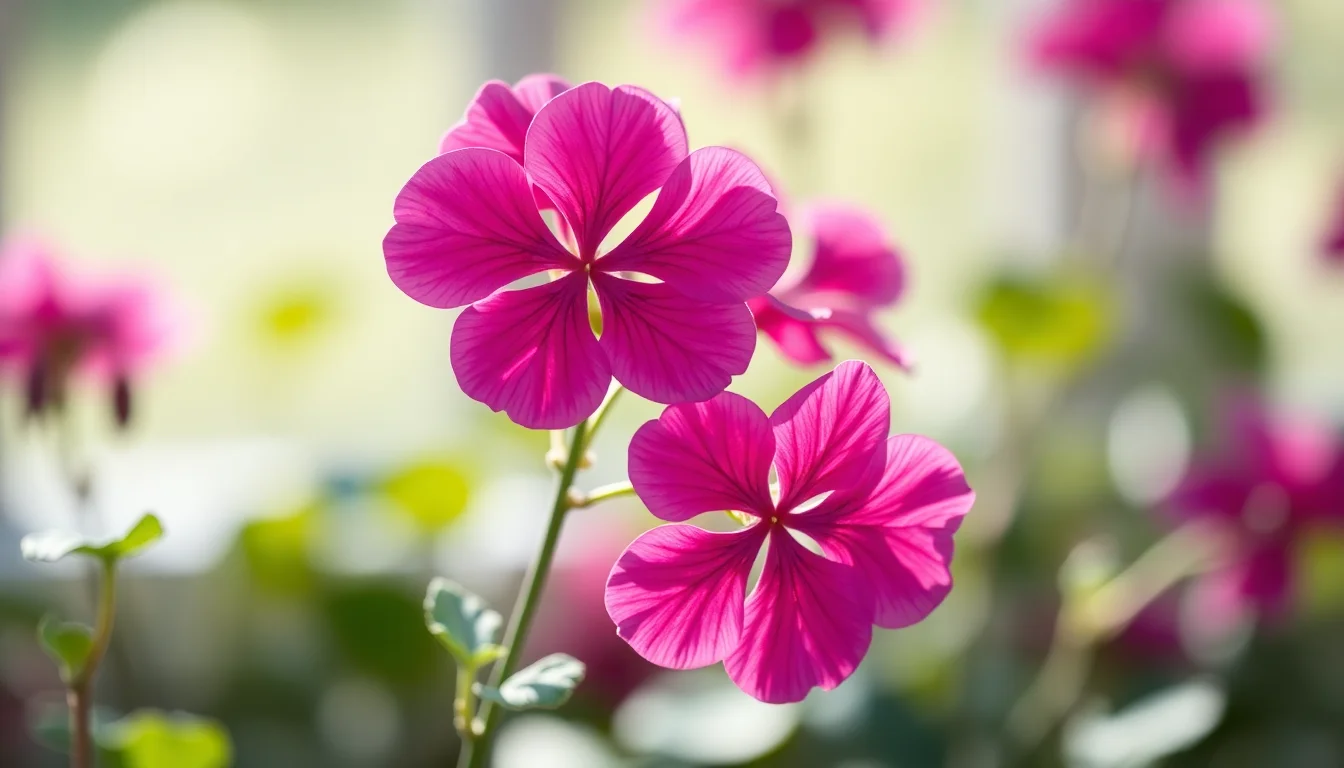
Geranium absolute is a luxurious floral extract from Pelargonium plants, often encountered in high-end perfumes and aromatherapy products. Its rich, rosy-green scent makes it a favorite for creating sophisticated floral bouquets. This ingredient matters because it bridges the gap between rose and citrus notes, offering perfumers a versatile tool that’s more affordable than rose absolute while delivering comparable complexity.
Safety Profile
USE WITH AWARENESSWhat Does Geranium absolute Smell Like?
Geranium absolute bursts with an intense, rosy-floral character underscored by crisp green menthol nuances. The opening is bright and slightly citrusy, reminiscent of crushed leaves with a hint of lemon. As it evolves, a honeyed sweetness emerges, layered with peppery spice and a faint earthy undertone. The dry-down reveals a warm, tea-like quality that lingers close to the skin. Unlike rose, it carries a distinctive herbal sharpness that prevents cloying sweetness, making it ideal for modern floral compositions that need freshness and depth.
In Famous Fragrances
Fragrance associations may not reflect actual formulations.
Geranium’s green-floral facets amplify the galbanum in this iconic chypre, creating a crisp contrast to the powdery iris heart.
Used here to mimic sun-warmed skin, geranium’s honeyed tones blend with coconut and tiare for a solar floral effect.
Showcases geranium’s full spectrum from spicy top notes to rosy heart, amplified by mint and bergamot for freshness.
Geranium absolute lends a crisp counterpoint to Bulgarian rose, preventing the composition from becoming overly powdery.
Geranium’s green facets bridge the spicy ginger opening to the floral heart, adding structural complexity.
Chemistry, Properties & Perfumer Guide
The Chemistry
Geranium absolute is a complex mixture containing citronellol (15-30%), geraniol (10-20%), and linalool (5-15%) as major constituents. The characteristic green notes come from trace isomenthone and sesquiterpenes. Extraction typically involves solvent extraction of Pelargonium graveolens leaves, yielding a viscous greenish-brown paste. Unlike essential oils obtained by distillation, absolutes retain more polar compounds like phenylpropanoids, contributing to their rounded, honeyed character. The exact composition varies by cultivar, with Egyptian and Bourbon types showing higher rose-like characteristics due to elevated geraniol content.
Physical & Chemical Properties
| Appearance | Viscous greenish-brown liquid |
|---|---|
| Flash Point | >100 °C |
| Solubility | Soluble in ethanol, fixed oils; insoluble in water |
Key Constituent Properties
| Constituent | CAS | MW | BP °C | XLogP | Vapor P. |
|---|---|---|---|---|---|
| Citronellol | 106-22-9 | 156.27 | 225 °C | 3.1 | 0.01 mmHg |
| Geraniol | 106-24-1 | 154.25 | 229 °C | 3.3 | 0.01 mmHg |
| Linalool | 78-70-6 | 154.25 | 198 °C | 2.7 | 0.16 mmHg |
Perfumer Guide
| Application | Typical % | Range | Notes |
|---|---|---|---|
| Fine Fragrance | 0.5-2% | Up to 5% | Adds floral depth without overpowering |
| Soaps | 0.1-0.5% | Up to 1% | Use stabilized versions to prevent discoloration |
| Candles | 1-3% | Up to 5% | Contributes to hot throw with rosy nuances |
| Aromatherapy | 0.5-1% | Up to 2% | Often blended with lavender for relaxation |
Classic Accords
Tip: Pre-dilute in benzyl benzoate (1:1) to improve solubility in alcohol bases and reduce crystallization.
Alternatives & Comparisons
For richer, more voluptuous floralcy when budget allows, though lacks geranium’s green freshness.
Distilled version offers brighter top notes but misses the honeyed depth of absolutes.
Synthetic option for rosy character without green facets, useful in functional fragrances.
Safety, Regulatory & Sustainability
⚠ Regulatory Disclaimer
General reference only. Consult current IFRA Standards Library before formulating.
IFRA Status
Restricted to 0.5% in leave-on products (IFRA 49) due to citronellol and geraniol content. No restrictions in rinse-off.
EU Allergen Declaration
Must be declared when present >0.001% in leave-on products: Citronellol, Geraniol, Linalool (Annex III of EU Regulation 1223/2009).
GHS Classification
RIFM Assessment
RIFM assessment confirms safe use at current IFRA limits, with citronellol identified as the limiting component for sensitization potential.
Sustainability
Geranium is primarily cultivated in Egypt, China, and Réunion Island, with most absolutes produced through hexane extraction. Organic-certified options exist but command premium pricing. Some producers are transitioning to ethanol extraction for cleaner solvent profiles. Unlike rose, geranium yields are relatively high (0.2-0.3% absolute from fresh material), making it more sustainable than many floral absolutes.
Explore Geranium absolute
Browse essential oils and aroma compounds.
Browse on iHerb →Affiliate disclosure: we may earn a small commission at no extra cost to you.
References
- Boelens (1994). Essential Oils from Pelargonium graveolens. Journal of Essential Oil Research. DOI 10.1080/10412905.1994.9698411
- IFRA Standards Library – Amendment 49 IFRA 49
- Tisserand & Young (2014). Essential Oil Safety. Elsevier. ISBN 9780443062414
Data: PubChem (NIH), PubMed, RIFM, IFRA. Last reviewed: Apr 2026.
Report a data errorIngredient Data Sheet
CAS 8000-46-2Odor & Flavor
| Réunion geranium oil, also known as Bourbon geranium oil, is obtained by steam distillation of the fresh plants harvested at the time of initial bloom. The oil has a strong, rose-like odor and a characteristic mint-like note. Algerian geranium oil is obtained by steam distillation of the leaves prior to their turning yellow and shortly before blossoming. It has a rose-like odor. The fragrance of Algerian oil is considered superior (less minty) than Réunion oil. Moroccan geranium oil is obtained by steam distillation from the freshly cut leaves and stems of P. roseum. It has a rose-like, herbaceous odor.📖 Fenaroli |
Regulatory Status
| IOFI Classification | Natural📖 Fenaroli |
Physical data: PubChem (NIH/NLM), U.S. EPA CompTox Dashboard, EPA OPERA models, RDKit. Odor & flavor: Arctander (Perfume & Flavor Chemicals), Fenaroli's Handbook of Flavor Ingredients, Leffingwell. Thresholds: van Gemert (Compilations of Odour Threshold Values). Regulatory: IFRA Standards 51st, FEMA GRAS. Trade names: Surburg (Common Fragrance & Flavor Materials). All data compiled and cross-referenced for perfumertools.com.
Related Research