
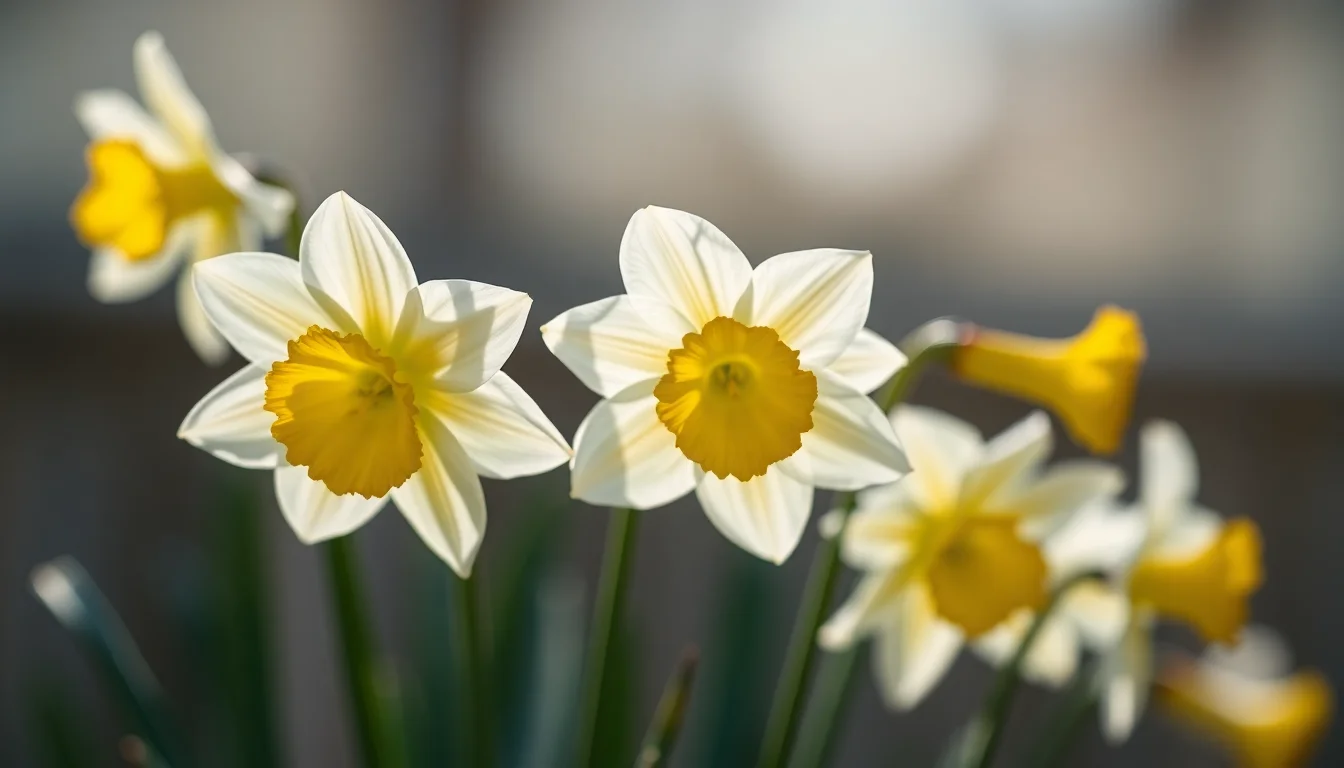
Narcissus poeticus absolute (CAS 68917-12-4) — Floral Heart Note Fragrance Ingredient
Narcissus poeticus absolute
CAS 68917-12-4
What Is Narcissus poeticus absolute?
Narcissus poeticus absolute is a rare and luxurious floral extract from the poet’s daffodil. It’s found in high-end perfumes and niche fragrances, prized for its intoxicating green-floral character. This ingredient matters because it captures the essence of spring meadows with a complex, slightly narcotic bouquet that’s impossible to fully replicate synthetically.
Safety Profile
USE WITH AWARENESSWhat Does Narcissus poeticus absolute Smell Like?
Narcissus absolute unfolds with an intense green stemminess that recalls crushed daffodil stalks at dawn. As it evolves, a honeyed floral heart emerges – like pollen dusted with vanilla powder and damp earth. The dry-down reveals animalic undertones reminiscent of warm skin, with a lingering narcotic sweetness that persists for hours. This is not a shy floral but a dramatic soliflore that demands attention, with facets ranging from crisp cucumber water to indolic white flowers.
In Famous Fragrances
Fragrance associations may not reflect actual formulations.
Used to recreate the intoxicating scent of spring meadows, providing the narcotic floral heart that makes this fragrance legendary.
The star ingredient that gives this vintage perfume its hypnotic, slightly dangerous floral character.
Provides the green-floral realism that transports wearers to an actual narcissus field in bloom.
Chemistry, Properties & Perfumer Guide
The Chemistry
Narcissus poeticus absolute is obtained through solvent extraction of the flowers, yielding a complex mixture of over 200 compounds. Key constituents include benzyl acetate, linalool, and indole, along with unique trace components like narcissin. The extraction process is labor-intensive, requiring thousands of hand-picked blossoms to produce small quantities of absolute. Unlike synthetic reconstructions, the natural absolute contains chiral molecules that contribute to its unparalleled depth.
Physical & Chemical Properties
| Appearance | Dark greenish-brown viscous liquid |
|---|---|
| Solubility | Soluble in alcohol and oils |
Perfumer Guide
| Application | Typical % | Range | Notes |
|---|---|---|---|
| Fine Fragrance | 0.1-0.5% | Up to 1% | Used sparingly due to intensity |
| Candles | 0.05-0.2% | Up to 0.5% | Provides floral lift in home scents |
Classic Accords
Tip: Use in trace amounts to add narcotic depth to white floral compositions.
Alternatives & Comparisons
When budget or sustainability concerns preclude natural absolute, though lacks the complexity.
Safety, Regulatory & Sustainability
⚠ Regulatory Disclaimer
General reference only. Consult current IFRA Standards Library before formulating.
IFRA Status
No specific restrictions under current IFRA standards (Amendment 49).
EU Allergen Declaration
Contains trace amounts of benzyl benzoate (CAS 120-51-4) requiring declaration above 0.001% in leave-on products.
RIFM Assessment
RIFM assessment confirms safe use at current industry levels.
Sustainability
Narcissus absolute is extremely resource-intensive, requiring approximately 1000kg of flowers to produce 1kg of absolute. Ethical sourcing is critical as wild populations are vulnerable. Some producers are developing sustainable cultivation methods to reduce pressure on wild stocks while maintaining quality.
Explore Narcissus poeticus absolute
Browse essential oils and aroma compounds.
Browse on iHerb →Affiliate disclosure: we may earn a small commission at no extra cost to you.
References
- Arctander, S. (1960). Perfume and Flavor Materials of Natural Origin.
Data: PubChem (NIH), PubMed, RIFM, IFRA. Last reviewed: Apr 2026.
Report a data errorIngredient Data Sheet
CAS 68917-12-4Physical data: PubChem (NIH/NLM), U.S. EPA CompTox Dashboard, EPA OPERA models, RDKit. Odor & flavor: Arctander (Perfume & Flavor Chemicals), Fenaroli's Handbook of Flavor Ingredients, Leffingwell. Thresholds: van Gemert (Compilations of Odour Threshold Values). Regulatory: IFRA Standards 51st, FEMA GRAS. Trade names: Surburg (Common Fragrance & Flavor Materials). All data compiled and cross-referenced for perfumertools.com.
Related Research
- Ethyl 3-hydroxybutyrate (CAS 5405-41-4) — Sweet Top to Middle Note Fragrance Ingredient
- Terpenes and terpenoids, turpentine-oil residues (CAS 68938-00-1) — Citrus Top to Base Note Fragrance Ingredient
- 2-Methylbutyl 2-methylbutyrate (CAS 2445-78-5) — Sweet Top to middle Note Fragrance Ingredient
- Bisabolol (CAS 515-69-5) — Floral Base Note Fragrance Ingredient

![Ethanone, 1-(4,11,11,-trimethyl-8-methylenebicyclo[7.2.0]undec-4-enyl)-[1R-(1a,4E,9b] (CAS 70801-04-06) — Woody Base Note Fragrance Ingredient](https://thegoodscents.company/wp-content/uploads/2026/04/ethanone-1-1-11-768x439.webp)
![2-[(3,3,5-Trimethylcyclohexyl)acetyl]cyclopentan-1-one (CAS 84642-57-9) — Woody Heart to base Note Fragrance Ingredient](https://thegoodscents.company/wp-content/uploads/2026/04/2-1-23-768x439.webp)
