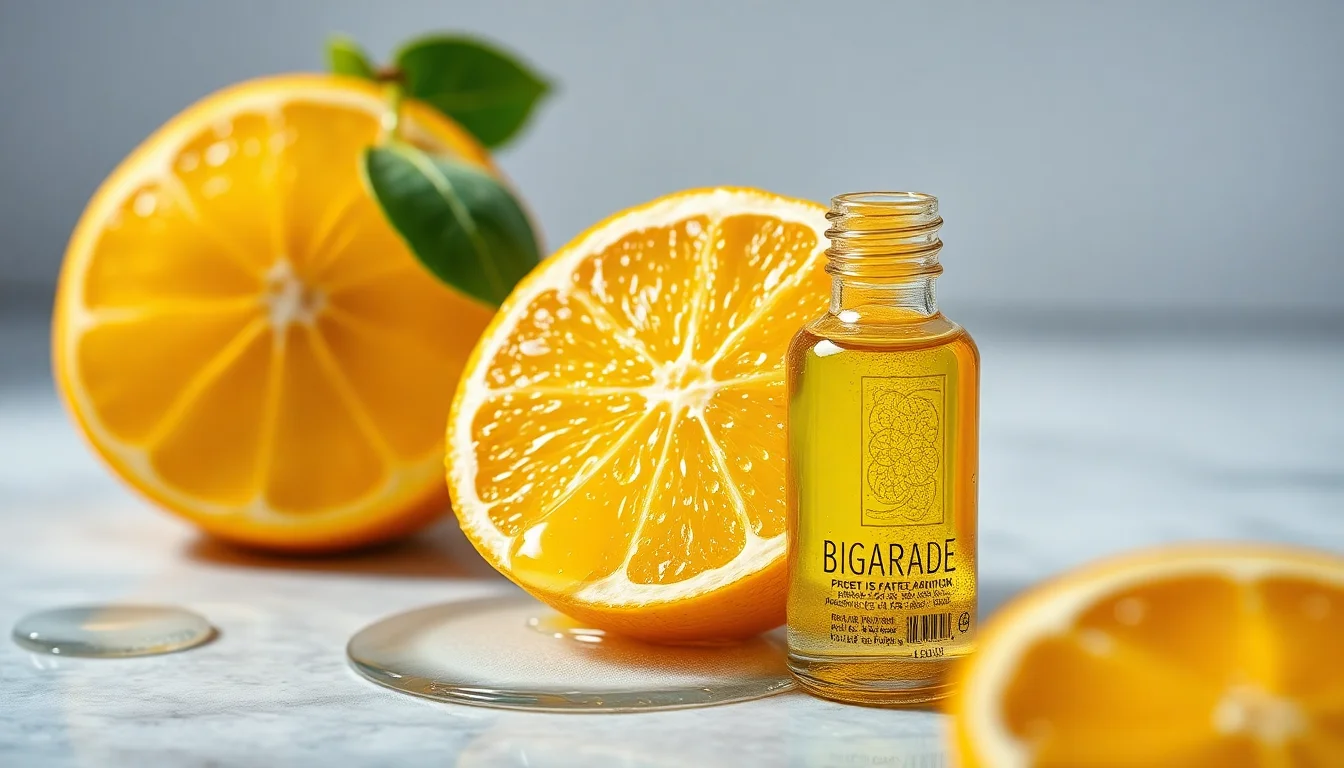
Bigarade oil, washed (CAS 68916-04-01) — Citrus Top Note Fragrance Ingredient
Bigarade oil, washed
CAS 68916-04-01
What Is Bigarade oil, washed?
Bigarade oil, washed is a refined citrus oil derived from bitter orange peels. You’ll encounter it in premium perfumes, colognes, and luxury skincare products where a bright, clean citrus note is desired. This ingredient matters because it provides the authentic sparkle of bitter orange without the harshness of unprocessed oils, making it a favorite among perfumers for creating sophisticated citrus accords.
Safety Profile
GENERALLY SAFEWhat Does Bigarade oil, washed Smell Like?
Washed bigarade oil bursts with the vibrant, sun-drenched aroma of freshly peeled bitter oranges – think marmalade-making in a Mediterranean courtyard. The top note is a crisp, slightly green citrus sparkle that evolves into a rounded floral-orange heart with subtle honeyed undertones. Unlike raw citrus oils, the washed version has a cleaner dry-down, leaving a refined citrus-resinous trail without the harsh terpenic edges. The scent maintains remarkable tenacity for a citrus note, lingering as a sophisticated whisper rather than disappearing abruptly.
In Famous Fragrances
Fragrance associations may not reflect actual formulations.
The washed bigarade provides the luminous citrus opening that defines this classic, blending seamlessly with rosemary and basil for a crisp yet sophisticated freshness that revolutionized masculine perfumery.
Here the washed bigarade oil delivers photorealistic bitter orange peel without the rough edges, allowing the juicy blood orange accord to shine while maintaining exceptional longevity for a citrus-centric fragrance.
Chemistry, Properties & Perfumer Guide
The Chemistry
Bigarade oil is obtained through cold pressing of Citrus aurantium peels, with subsequent washing processes removing phototoxic furocoumarins and stabilizing the oil. The washing typically involves selective solvent extraction or distillation steps that reduce limonene content while preserving key oxygenated compounds like linalool and decanal. This results in an oil with improved stability and reduced skin sensitivity potential while maintaining the characteristic bitter orange aroma profile.
Physical & Chemical Properties
| Appearance | Pale yellow to orange liquid |
|---|---|
| Refractive Index | 1.472-1.476 (20°C) |
| Specific Gravity | 0.842-0.848 (25°C) |
Perfumer Guide
| Application | Typical % | Range | Notes |
|---|---|---|---|
| Fine Fragrance | 2-5% | Up to 10% | Citrus core for eaux de cologne |
| Personal Care | 0.5-2% | Up to 3% | Brightening top note |
Classic Accords
Tip: Use washed bigarade when you need citrus brightness without the harshness of raw oils – perfect for sophisticated citrus compositions requiring stability.
Alternatives & Comparisons
Furocoumarin-free bergamot provides similar citrus freshness with more floral-linalool character when phototoxicity is a concern.
For formulations requiring more lemon-citrus punch and chemical stability, though lacks the complexity of natural bigarade.
Safety, Regulatory & Sustainability
⚠ Regulatory Disclaimer
General reference only. Consult current IFRA Standards Library before formulating.
IFRA Status
No restrictions under current IFRA standards (48th Amendment). Washed process reduces furocoumarin content below concern levels.
EU Allergen Declaration
Contains limonene (typically 70-90%) which requires declaration above 0.001% in leave-on products.
RIFM Assessment
RIFM safety assessment confirms washed bigarade oil as safe for current fragrance use levels when properly stored to prevent oxidation.
Sustainability
Sourced primarily from Mediterranean bitter orange groves, often as a byproduct of the food industry. The washing process reduces waste by making the oil suitable for more applications. Synthetic alternatives exist but lack the nuanced complexity of natural bigarade.
Explore Bigarade oil, washed
Browse essential oils and aroma compounds.
Browse on iHerb →Affiliate disclosure: we may earn a small commission at no extra cost to you.
References
- Dugo, G., & Di Giacomo, A. (2002). Citrus: The Genus Citrus. CRC Press. ISBN 9780415268950
Data: PubChem (NIH), PubMed, RIFM, IFRA. Last reviewed: Apr 2026.
Report a data error