Caraway seed oil (CAS 8000-42-8) — Spicy Middle Note Fragrance Ingredient
Caraway seed oil
CAS 8000-42-8
What Is Caraway seed oil?
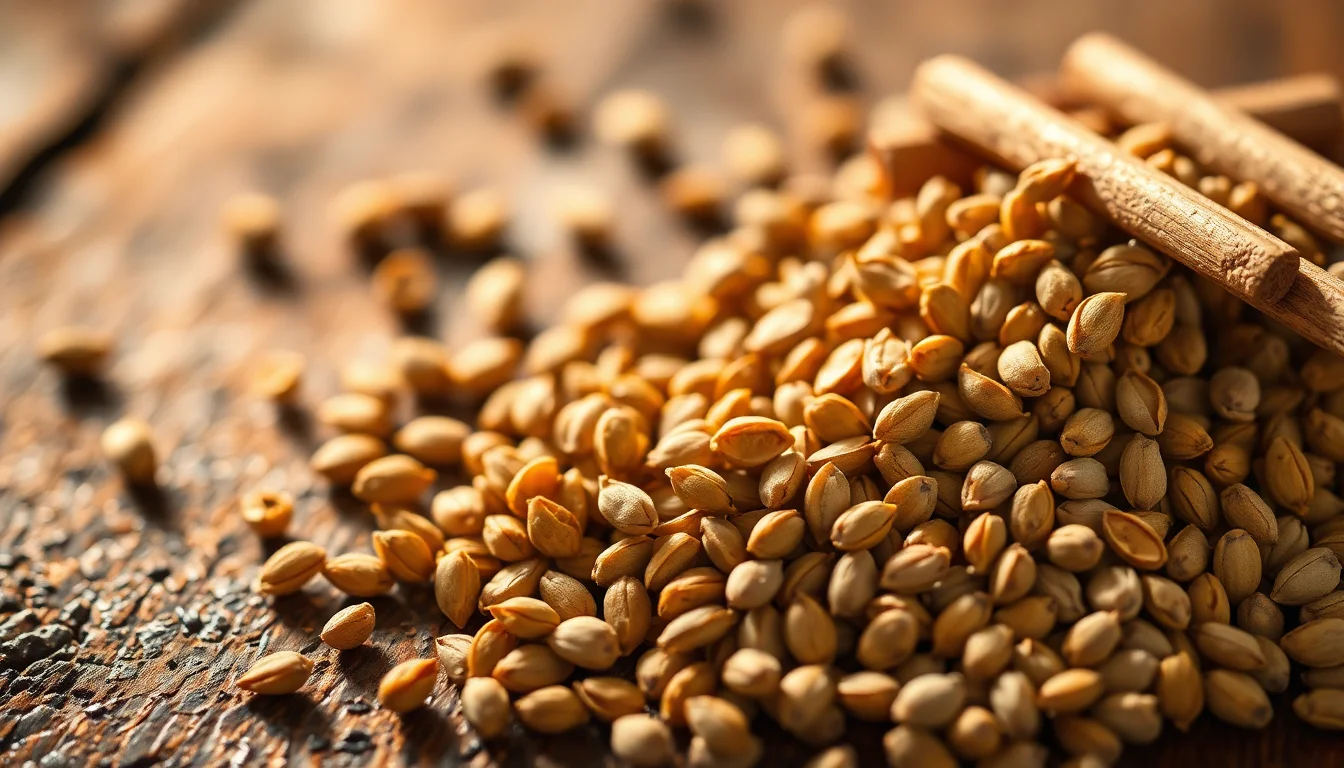
Caraway seed oil is a warm, spicy essential oil distilled from the seeds of Carum carvi. You’ll recognize its distinctive aroma in rye bread, Scandinavian aquavit, and some herbal liqueurs. This oil brings a comforting, kitchen-like warmth to fragrances and flavors. Its importance lies in the unique duality – simultaneously herbaceous and sweetly woody – that makes it indispensable for creating depth in masculine fragrances and adding complexity to gourmand compositions.
Safety Profile
USE WITH AWARENESSWhat Does Caraway seed oil Smell Like?
Caraway seed oil bursts with an intense, dry-spicy aroma reminiscent of fresh rye bread crust. The top notes carry a sharp, almost mentholated coolness that quickly warms into a complex heart of earthy cumin, toasted dill, and faint citrus peel. As it dries, the oil reveals a sweet woody base with whispers of warm leather and pipe tobacco. The overall effect is rustic yet sophisticated – like an old apothecary’s wooden cabinet filled with dried botanicals, with a lingering warmth that persists for hours.
In Famous Fragrances
Fragrance associations may not reflect actual formulations.
Caraway provides the crisp, masculine edge in this classic fougère, playing against lavender and clary sage to create a barbershop freshness with unexpected spicy depth.
Here caraway’s warm spice bridges the citrus top to woody base, adding a gourmand nuance that enhances the cocoa and patchouli accord.
Jean-Claude Ellena uses caraway’s aromatic sharpness to cut through the sweeter notes, creating a modern interpretation of spicy freshness.
Caraway adds a dry counterpoint to the opulent fruits and incense, preventing the composition from becoming overly sweet.
A rare feminine application where caraway’s spice enhances the citrus-floral heart with unexpected complexity.
Chemistry, Properties & Perfumer Guide
The Chemistry
Caraway seed oil primarily consists of carvone (50-65%) and limonene (30-45%), with minor amounts of carveol, dihydrocarvone, and various monoterpenes. The characteristic aroma comes from the (S)-(+)-carvone enantiomer, which differs from the (R)-(-)-carvone found in spearmint oil. Natural caraway oil is obtained through steam distillation of crushed seeds, typically yielding 3-6% essential oil. Synthetic alternatives often lack the full complexity of the natural oil due to missing trace constituents like trans-dihydrocarvone that contribute to the dry-down character.
Physical & Chemical Properties
| Appearance | Pale yellow to amber liquid |
|---|---|
| Boiling Point | 230-234 °C |
| Density | 0.900-0.910 g/cm³ |
| Refractive Index | 1.484-1.488 |
| Optical Rotation | +70° to +80° |
Key Constituent Properties
| Constituent | CAS | MW | BP °C | XLogP | Vapor P. |
|---|---|---|---|---|---|
| (S)-(+)-Carvone | 2244-16-8 | 150.22 | 230 | 2.1 | 0.1 mmHg |
| Limonene | 5989-27-5 | 136.24 | 176 | 4.2 | 1.5 mmHg |
Perfumer Guide
| Application | Typical % | Range | Notes |
|---|---|---|---|
| Fine Fragrance | 0.5-1.5% | Up to 3% | Adds spicy complexity to masculine accords |
| Soap/Detergent | 0.1-0.3% | Up to 0.5% | Use sparingly due to potential discoloration |
| Food Flavoring | 10-50 ppm | Up to 100 ppm | Common in baked goods and alcoholic beverages |
Classic Accords
Tip: Use with citrus oils to brighten the spice, or pair with vanilla to create a gourmand effect.
Alternatives & Comparisons
Offers similar spicy-herbaceous qualities but with a fresher, more vegetal character and lower carvone content.
Provides more animalic warmth and less sweetness, useful for darker oriental compositions.
Cleaner, more focused caraway note without the supporting cast of minor constituents.
Safety, Regulatory & Sustainability
⚠ Regulatory Disclaimer
General reference only. Consult current IFRA Standards Library before formulating.
IFRA Status
No restrictions under IFRA 49th Amendment. Contains potential allergens limonene and carvone requiring declaration above 0.01% in leave-on products.
EU Allergen Declaration
Limonene and carvone must be declared when present ≥0.01% in leave-on products, ≥0.1% in rinse-off products.
GHS Classification
RIFM Assessment
RIFM safety assessment confirms safe use at current industry levels, with some individuals potentially sensitive to carvone.
Sustainability
Caraway is cultivated primarily in Northern Europe and North Africa as a rotational crop, generally requiring minimal pesticides. Steam distillation is energy-intensive but produces no chemical waste. Synthetic alternatives reduce agricultural land use but lack the full sensory profile. Recent advances in enzymatic synthesis may offer more sustainable production routes for key constituents.
Explore Caraway seed oil
Browse essential oils and aroma compounds.
Browse on iHerb →Affiliate disclosure: we may earn a small commission at no extra cost to you.
References
- Gurdip Singh et al. (2006). Biological effects of essential oils. Flavour and Fragrance Journal. DOI:10.1002/ffj.1515
- PubChem Carvone entry CID 7439
- IFRA Standards Library IFRA 49th
Data: PubChem (NIH), PubMed, RIFM, IFRA. Last reviewed: Apr 2026.
Report a data errorIngredient Data Sheet
CAS 8000-42-8Odor & Flavor
| The oil is steam-distilled from the dried, crushed, ripe fruits. It is offered in market in at least two grades: crude and double rectified. The crude oil has an initial note of nauseating, almost amine-like type; the rectified oil does not have this odor.📖 Fenaroli |
Regulatory Status
| IOFI Classification | Natural📖 Fenaroli |
Physical data: PubChem (NIH/NLM), U.S. EPA CompTox Dashboard, EPA OPERA models, RDKit. Odor & flavor: Arctander (Perfume & Flavor Chemicals), Fenaroli's Handbook of Flavor Ingredients, Leffingwell. Thresholds: van Gemert (Compilations of Odour Threshold Values). Regulatory: IFRA Standards 51st, FEMA GRAS. Trade names: Surburg (Common Fragrance & Flavor Materials). All data compiled and cross-referenced for perfumertools.com.