Carvone (CAS 6485-40-1) — Green Heart Note Fragrance Ingredient
Carvone
CAS 6485-40-1
What Is Carvone?
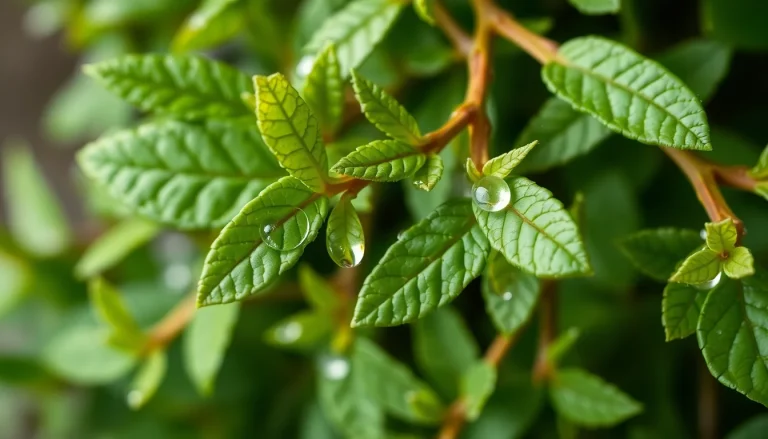
Carvone is a naturally occurring ketone found in spearmint and caraway seeds, giving them their characteristic aromas. You encounter it in chewing gums, toothpaste, and some herbal liqueurs. This molecule is fascinating because it exists in two mirror-image forms (R and S) that smell completely different – one like spearmint, the other like caraway – showcasing how molecular structure directly affects perception.
Safety Profile
GENERALLY SAFE
What Does Carvone Smell Like?
Carvone presents two distinct olfactory personalities. The (R)-form bursts with fresh, sweet spearmint character – think just-crushed leaves with a cooling, almost mentholated edge. The (S)-form shifts dramatically to warm, earthy caraway with dusty anise undertones. Both versions share a crisp herbal core that evolves into a dry, slightly woody trail. In blends, carvone acts like a chameleon – amplifying citrus in top notes while seamlessly transitioning to spice accords, leaving a clean aromatic imprint that lasts surprisingly long for its molecular weight.
Scent Profile
In Famous Fragrances
Fragrance associations may not reflect actual formulations.
Uses (R)-carvone as the star player, recreating the sensation of mint leaves crushed between fingers with photorealistic precision, balanced by white musk to prevent harshness.
Showcases (S)-carvone’s darker facets, blending it with black pepper and tonka to create an enigmatic rye bread accord with mysterious depth.
2D Molecular Structure
SMILES: CC(=C)[C@@H]1CC=C(C)C(=O)C1
Chemistry, Properties & Perfumer Guide
The Chemistry
Carvone (C10H14O) is a monoterpenoid ketone existing as R and S enantiomers. The R-form dominates spearmint oil (60-70%), while the S-form comprises 50-60% of caraway oil. Industrial production involves fractional distillation of these essential oils or stereoselective synthesis from limonene. Chirality profoundly impacts odor – the R-enantiomer’s minty character comes from its molecular fit in OR1A1 olfactory receptors, while the S-form interacts differently due to its mirror-image structure. Both isomers share low water solubility (1.3 g/L) but mix well with alcohols and oils.
Physical & Chemical Properties
| Boiling Point | 231 °C |
|---|---|
| Density | 0.96 g/cm³ |
| Vapor Pressure | 0.1 mmHg at 25°C |
Perfumer Guide
| Application | Typical % | Range | Notes |
|---|---|---|---|
| Oral Care | 0.1-0.5% | Up to 1% | Provides fresh mint character |
| Fine Fragrance | 0.5-2% | Up to 3% | Used in fougères and citrus colognes |
Classic Accords
+ Grapefruit + Galbanum = Sporty Fresh
Tip: Always specify desired enantiomer – the wrong form can turn a minty fresh accord into a dill pickle disaster.
Alternatives & Comparisons
More straightforward mint character without carvone’s duality, better for simple mint compositions needing less complexity.
Safety, Regulatory & Sustainability
⚠ Regulatory Disclaimer
General reference only. IFRA, REACH, EU Cosmetics Regulation standards update periodically. Consult current IFRA Standards Library before formulating. Not legal or regulatory advice.
IFRA Status
No IFRA restrictions. Listed in IFRA Transparency List Amendment 51.
EU Allergen Declaration
Not listed as EU allergen.
RIFM Assessment
RIFM evaluation confirms safety at current use levels in fragrances (FEMA 2249).
Sustainability
Natural carvone is sustainably sourced through steam distillation of renewable spearmint crops, primarily grown in the American Midwest. Synthetic production via catalytic oxidation of limonene (a byproduct of citrus processing) provides a circular economy alternative. Both routes have low environmental impact compared to petrochemical synthesis.
Explore Carvone
Browse essential oils and aroma compounds.
Affiliate disclosure: we may earn a small commission at no extra cost to you.
Industry & Science Data
References
- Leffingwell JC. (2003). Chirality & Odor Perception. Leffingwell Reports. Chirality Review
Data: PubChem (NIH), PubMed, RIFM, IFRA. Last reviewed: Mar 2026.
Ingredient Data Sheet
CAS 6485-40-1Physical Properties
| Molecular Weight | 150.22 g/mol🔬 PubChem |
| LogP (Octanol-Water) | 2.4🔬 PubChem |
| Boiling Point | 227 °C🔬 EPA CompTox |
| Vapor Pressure | 0.375 mmHg @ 25°C📊 OPERA |
| Flash Point | 92 °C🔬 EPA CompTox |
| Involatility Index | 0.033💻 Calculated |
| log Kp (skin permeability) | -1.912💻 Calculated |
| SMILES | CC1=CCC(CC1=O)C(=C)C🔬 PubChem |
Volatility & Performance
| Fragrance Note | Heart💻 Calculated |
| Volatility Class | Slow💻 Calculated |
| Persistence Score | 0.7 / 5💻 Calculated |
Odor & Flavor
| Primary Descriptors | minty• leffingwell |
| Functional Groups | ketonealkene💻 RDKit |
Sensory Thresholds
| Odor Detection Threshold | 0.1584 ppm (n=12)📖 van Gemert |
Regulatory Status
| IFRA Listed | Yes — see IFRA Standards for category limits⚖️ IFRA 51 |
| EU Annex III | Listed (restricted)⚖️ IFRA 51 |
Physical data: PubChem (NIH/NLM), U.S. EPA CompTox Dashboard, EPA OPERA models, RDKit. Odor & flavor: Arctander (Perfume & Flavor Chemicals), Fenaroli's Handbook of Flavor Ingredients, Leffingwell. Thresholds: van Gemert (Compilations of Odour Threshold Values). Regulatory: IFRA Standards 51st, FEMA GRAS. Trade names: Surburg (Common Fragrance & Flavor Materials). All data compiled and cross-referenced for perfumertools.com.
Physicochemical Properties
DTXSID: DTXSID7041413
Physical Properties
| Molecular Weight | 150.221 g/mol🔬 EPA CompTox |
| Density | 0.959 g/cm^3🔬 EPA CTX |
| Boiling Point | 229.4 °C🔬 EPA CTX |
| Melting Point | 25 °C🔬 EPA CTX |
| Flash Point | 89.383 °C🔬 EPA CTX |
| Refractive Index | 1.481 Dimensionless📊 OPERA |
| Molar Volume | 159.761 cm^3/mol📊 OPERA |
Partition & Solubility
| LogP (Octanol-Water) | 2.715 Log10 unitless🔬 EPA CTX |
| LogD (pH 5.5) | 2.581 Log10 unitless📊 OPERA |
| LogD (pH 7.4) | 2.581 Log10 unitless📊 OPERA |
| LogKoa (Octanol-Air) | 5.06 Log10 unitless📊 OPERA |
| Water Solubility | 0.009 mol/L🔬 EPA CTX |
| Henry's Law Constant | 0 atm-m3/mole🔬 EPA CTX |
Transport Properties
| Vapor Pressure | 0.213 mmHg🔬 EPA CTX |
| Surface Tension | 32.018 dyn/cm📊 OPERA |
Molecular Descriptors
| Topological Polar Surface Area | 17.07 Ų💻 Computed |
| H-Bond Donors | 0 count💻 Computed |
| H-Bond Acceptors | 1 count💻 Computed |
| Rotatable Bonds | 1 count💻 Computed |
| Aromatic Rings | 0 count💻 Computed |
| Molar Refractivity | 45.485 cm^3/mol📊 OPERA |
| Polarizability | 18.032 Å^3📊 OPERA |
Data Sources:
🔬 EPA Experimental data from U.S. EPA CompTox Chemicals Dashboard & CTX APIs. 📊 OPERA Predicted using EPA's OPERA QSAR models. 💻 Computed Calculated from SMILES using RDKit.
Related Research
- Balsams, Canada, oleoresin (CAS 8007-47-4) — Balsamic Base Note Fragrance Ingredient
- 1,1-Diethoxyheptane (CAS 688-82-4) — Green Top to middle Note Fragrance Ingredient
- 2-Isopropyl-N,2,3-trimethylbutyramide (CAS 51115-67-4) — Citrus N/A Note Fragrance Ingredient
- Oxacyclotridecan-2-one (CAS 0947-05-07) — Musky Base Note Fragrance Ingredient