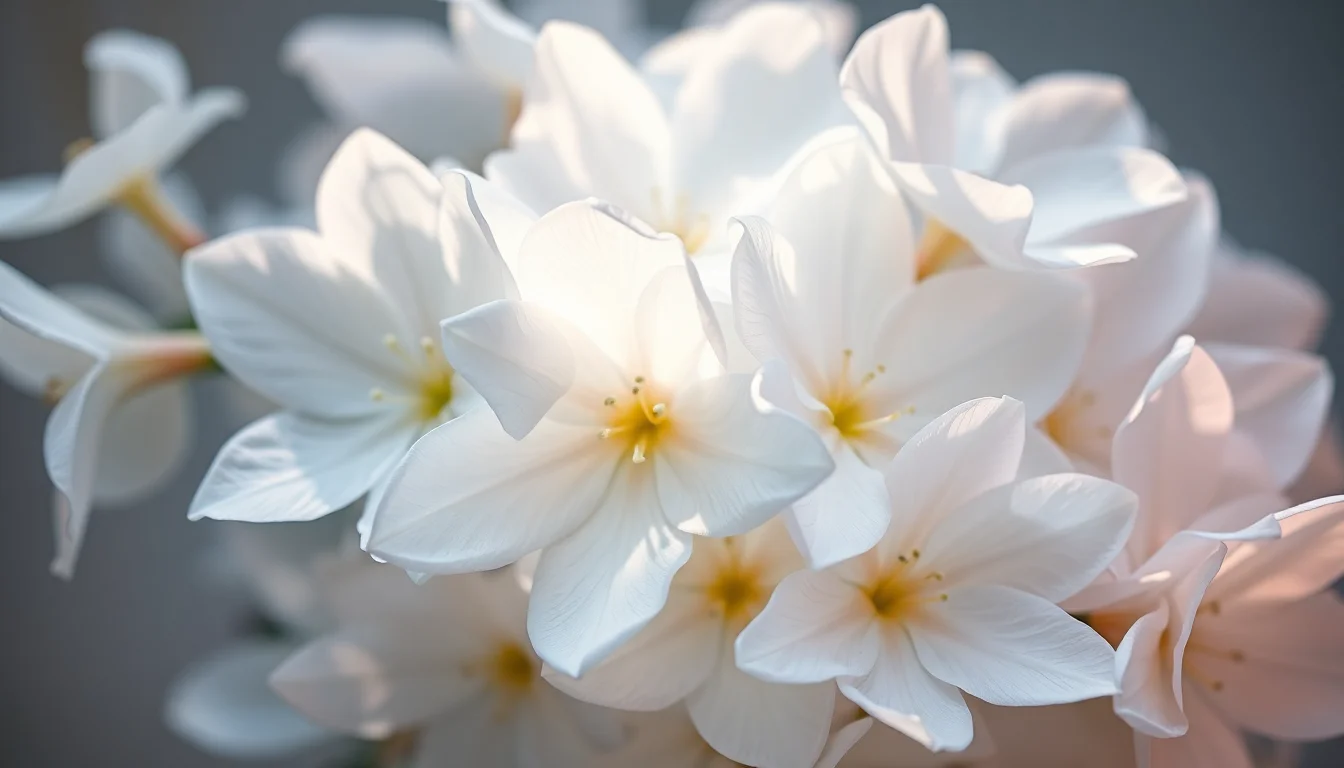
Farnesol (CAS 4602-84-0) — Floral Top Note Fragrance Ingredient
Farnesol
CAS 4602-84-0
What Is Farnesol?
Farnesol is a natural organic compound found in essential oils like rose, citronella, and neroli. It’s used in perfumes for its fresh, floral scent with woody undertones. Farnesol matters because it’s a key ingredient in many floral and citrus fragrances, adding depth and longevity. It’s also used in cosmetics and as a natural preservative due to its antimicrobial properties.
Safety Profile
GENERALLY SAFE
What Does Farnesol Smell Like?
Farnesol offers a delicate, floral aroma reminiscent of lily of the valley with a subtle citrusy freshness. Its top note is light and slightly sweet, evolving into a heart of green, floral tones. The dry-down reveals a soft, woody base that lingers gracefully. It’s a versatile scent that blends well with both floral and citrus accords.
Scent Profile
In Famous Fragrances
Fragrance associations may not reflect actual formulations.
Farnesol adds a floral depth to the iconic aldehydic bouquet, enhancing the rose and jasmine heart notes.
Used to amplify the floral richness, farnesol bridges the top citrus notes with the heart of ylang-ylang and rose.
2D Molecular Structure
SMILES: CC(C)=CCCC(C)=CCCC(C)=CCO
Chemistry, Properties & Perfumer Guide
The Chemistry
Farnesol is a sesquiterpenoid alcohol with the molecular formula C15H26O. It occurs naturally in many essential oils and is synthesized via the mevalonate pathway. Its structure includes three isoprene units, contributing to its volatility and scent profile. Farnesol exists in several isomeric forms, with (E,E)-farnesol being the most common in nature.
Physical & Chemical Properties
| Boiling Point | 298 °C |
|---|---|
| Density | 0.887 g/cm³ |
Perfumer Guide
| Application | Typical % | Range | Notes |
|---|---|---|---|
| Fine Fragrance | 1-5% | Up to 10% | Adds floral depth and longevity |
| Cosmetics | 0.5-2% | Up to 5% | Used for scent and preservative properties |
Classic Accords
+ Bergamot + Neroli = Citrus
Tip: Use farnesol to enhance floral notes and add a natural freshness to citrus blends.
Alternatives & Comparisons
A similar sesquiterpenoid alcohol with a more woody, floral scent, often used as a substitute in floral fragrances.
Safety, Regulatory & Sustainability
⚠ Regulatory Disclaimer
General reference only. IFRA, REACH, EU Cosmetics Regulation standards update periodically. Consult current IFRA Standards Library before formulating. Not legal or regulatory advice.
IFRA Status
Not restricted by IFRA. Safe for use in fragrances within typical usage levels.
EU Allergen Declaration
Farnesol is not listed as an EU allergen.
RIFM Assessment
RIFM has assessed farnesol as safe for use in fragrances at current levels.
Sustainability
Farnesol is sustainably sourced from natural essential oils or produced synthetically. Synthetic production reduces environmental impact by avoiding overharvesting of plants. It is biodegradable and poses minimal risk to aquatic life.
Explore Farnesol
Browse essential oils and aroma compounds.
Affiliate disclosure: we may earn a small commission at no extra cost to you.
Industry & Science Data
References
- PubChem Compound Summary for Farnesol CID 445070
Data: PubChem (NIH), PubMed, RIFM, IFRA. Last reviewed: Mar 2026.
Ingredient Data Sheet
CAS 4602-84-0Physical Properties
| Molecular Weight | 222.37 g/mol🔬 PubChem |
| LogP (Octanol-Water) | 4.8🔬 PubChem |
| Boiling Point | 110 °C🔬 EPA CompTox |
| Vapor Pressure | 0 mmHg @ 25°C📊 OPERA |
| Flash Point | 150 °C🔬 EPA CompTox |
| log Kp (skin permeability) | -0.648💻 Calculated |
| SMILES | CC(=CCCC(=CCCC(=CCO)C)C)C🔬 PubChem |
Volatility & Performance
| Fragrance Note | Heart💻 Calculated |
| Volatility Class | Very slow💻 Calculated |
| Persistence Score | 10.6 / 5💻 Calculated |
Odor & Flavor
| Primary Descriptors | floralsweet• leffingwell |
| Functional Groups | alcoholalkene💻 RDKit |
| “Very mild and delicate, sweet-oily odor, slowly developing a floral fresh-green note, reminiscent of certain notes from Muguet. The tenacity is outstanding, but the material as such tends to develop a different odor if it is exposed to air for longer time (blotter test).”📖 Arctander | |
| Farnesol has a characteristic flowery odor. The physical constants vary slightly, depending on the source and the method of preparation. -📖 Fenaroli | |
Flavor Notes (Arctander)
| “fume and flavor oils and in Propylene glycol. terial is incorporated in a flavor formulation.”📖 Arctander |
Sensory Thresholds
| Odor Detection Threshold | 0.342 ppm (n=3)📖 van Gemert |
Regulatory Status
| IFRA Listed | Yes — see IFRA Standards for category limits⚖️ IFRA 51 |
| EU Annex III | Listed (restricted)⚖️ IFRA 51 |
| FEMA Number | FEMA 2478⚖️ FEMA GRAS |
| GRAS Status | Generally Recognized as Safe⚖️ FEMA GRAS |
| IOFI Classification | Nature Identical📖 Fenaroli |
Physical data: PubChem (NIH/NLM), U.S. EPA CompTox Dashboard, EPA OPERA models, RDKit. Odor & flavor: Arctander (Perfume & Flavor Chemicals), Fenaroli's Handbook of Flavor Ingredients, Leffingwell. Thresholds: van Gemert (Compilations of Odour Threshold Values). Regulatory: IFRA Standards 51st, FEMA GRAS. Trade names: Surburg (Common Fragrance & Flavor Materials). All data compiled and cross-referenced for perfumertools.com.
Physicochemical Properties
DTXSID: DTXSID3032389
Physical Properties
| Molecular Weight | 222.372 g/mol🔬 EPA CompTox |
| Density | 0.887 g/cm^3🔬 EPA CTX |
| Boiling Point | 213.488 °C🔬 EPA CTX |
| Melting Point | 25 °C🔬 EPA CTX |
| Flash Point | 125.033 °C🔬 EPA CTX |
| Refractive Index | 1.485 Dimensionless📊 OPERA |
| Molar Volume | 253.891 cm^3/mol📊 OPERA |
Partition & Solubility
| LogP (Octanol-Water) | 4.69 Log10 unitless🔬 EPA CTX |
| LogD (pH 5.5) | 4.813 Log10 unitless📊 OPERA |
| LogD (pH 7.4) | 4.813 Log10 unitless📊 OPERA |
| LogKoa (Octanol-Air) | 8.54 Log10 unitless📊 OPERA |
| Water Solubility | 0 mol/L📊 OPERA |
| Henry's Law Constant | 0 atm-m3/mole📊 OPERA |
Transport Properties
| Vapor Pressure | 0.075 mmHg🔬 EPA CTX |
| Viscosity | 6.499 cP📊 OPERA |
| Surface Tension | 28.777 dyn/cm📊 OPERA |
| Thermal Conductivity | 140.681 mW/(m*K)📊 OPERA |
Molecular Descriptors
| Topological Polar Surface Area | 20.23 Ų💻 Computed |
| H-Bond Donors | 1 count💻 Computed |
| H-Bond Acceptors | 1 count💻 Computed |
| Rotatable Bonds | 7 count💻 Computed |
| Aromatic Rings | 0 count💻 Computed |
| Molar Refractivity | 72.778 cm^3/mol📊 OPERA |
| Polarizability | 28.852 Å^3📊 OPERA |
Data Sources:
🔬 EPA Experimental data from U.S. EPA CompTox Chemicals Dashboard & CTX APIs. 📊 OPERA Predicted using EPA's OPERA QSAR models. 💻 Computed Calculated from SMILES using RDKit.
![Benzenepropanoic acid, 3,5-bis(1,1-dimethylethyl)-4-hydroxy-, 2,2-bis[[3-[3,5-bis(1,1-dimethylethyl)-4-hydroxyphenyl]-1-oxopropoxy]methyl]- -1,3-propanediyl ester (CAS 6683-19-8) — Citrus Fixative Note Fragrance Ingredient](https://thegoodscents.company/wp-content/uploads/2026/04/benzenepropanoic-acid-3-5-bis-1-768x439.webp)
![1,3-Propanedione, 1-[4-(1,1-dimethylethyl)phenyl]-3-(4-methoxyphenyl)- (CAS 70356-09-01) — Sweet Middle Note Fragrance Ingredient](https://thegoodscents.company/wp-content/uploads/2026/04/1-3-propanedione-1-4-1-1-768x439.webp)