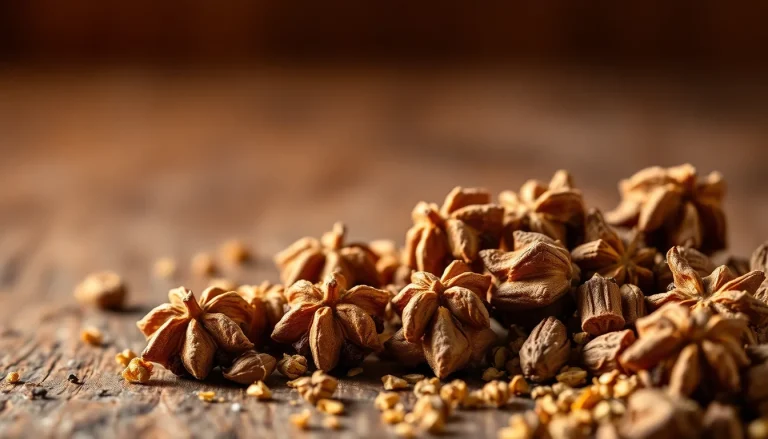
Linolenic acid (CAS 463-40-1) — Green None Note Fragrance Ingredient
Linolenic acid
CAS 463-40-1
What Is Linolenic acid?
Linolenic acid is an omega-3 fatty acid found in plant oils like flaxseed and canola. While not commonly used in fragrances, it appears in some skincare products for its skin-conditioning properties. This unsaturated fatty acid plays a more functional than aromatic role in formulations, serving as an emollient rather than a fragrance ingredient.
Safety Profile
GENERALLY SAFEWhat Does Linolenic acid Smell Like?
Linolenic acid has minimal odor impact in fragrance applications. When pure, it may present faint, slightly green-fatty notes reminiscent of crushed plant leaves or unrefined vegetable oils. The odor profile is generally neutral-to-mild with no significant top/middle/base development. In formulations, its olfactory contribution is typically overshadowed by other ingredients, functioning primarily as a skin-conditioning agent rather than an aromatic component.
2D Molecular Structure
SMILES: CC\C=C/C\C=C/C\C=C/CCCCCCCC(O)=O
Chemistry, Properties & Perfumer Guide
The Chemistry
Linolenic acid is an 18-carbon polyunsaturated fatty acid with three cis double bonds (omega-3). As an essential fatty acid, it occurs naturally in many plant oils including flaxseed, hemp, and canola. Industrially, it’s typically obtained through fractional distillation of vegetable oils or via chemical synthesis from petrochemical precursors. The molecule exists as both α-linolenic acid (ALA, 18:3 ω-3) and γ-linolenic acid (GLA, 18:3 ω-6) isomers, with ALA being more common in fragrance and cosmetic applications.
Physical & Chemical Properties
| State at RT | Liquid |
|---|---|
| Main Source | Flaxseed oil |
Perfumer Guide
| Application | Typical % | Range | Notes |
|---|---|---|---|
| Skincare | 0.5-5% | Up to 10% | Emollient properties |
| Haircare | 1-3% | Up to 5% | Conditioning agent |
Classic Accords
Tip: Use as a non-greasy emollient in water-based systems by pre-dispersing with emulsifiers.
Alternatives & Comparisons
Similar fatty acid with two double bonds instead of three, offering comparable skin benefits with slightly better oxidative stability.
Monounsaturated fatty acid providing similar emollient properties with greater formulation stability and less potential for rancidity.
Safety, Regulatory & Sustainability
⚠ Regulatory Disclaimer
General reference only. Consult current IFRA Standards Library before formulating.
IFRA Status
Not restricted by IFRA – primarily used for functional rather than fragrance purposes.
RIFM Assessment
RIFM considers linolenic acid safe as used in cosmetic applications based on its long history of use.
Sustainability
Linolenic acid is typically sourced from renewable plant oils, with flaxseed being the most common origin. Synthetic production exists but is less common due to the availability of natural sources. Sustainability considerations include agricultural practices for source crops and energy use in purification processes. Cold-pressed extraction methods are preferred for lower environmental impact.
Explore Linolenic acid
Browse essential oils and aroma compounds.
Browse on iHerb →Affiliate disclosure: we may earn a small commission at no extra cost to you.
References
- Gunstone, F.D. (2004). The Chemistry of Oils and Fats. Blackwell Publishing.
- USDA National Nutrient Database Release 28
Data: PubChem (NIH), PubMed, RIFM, IFRA. Last reviewed: Apr 2026.
Report a data errorPerfumer’s Notes
MW: 278.4
LogP: 5.9
Ingredient Data Sheet
CAS 463-40-1Physical Properties
| Molecular Weight | 278.4 g/mol🔬 PubChem |
| LogP (Octanol-Water) | 5.9🔬 PubChem |
| Boiling Point | 230 °C🔬 EPA CompTox |
| Vapor Pressure | 0.05 mmHg @ 25°C📊 OPERA |
| Flash Point | 112.8 °C🔬 EPA CompTox |
| Involatility Index | 0.0032💻 Calculated |
| log Kp (skin permeability) | -0.209💻 Calculated |
| SMILES | CCC=CCC=CCC=CCCCCCCCC(=O)O🔬 PubChem |
Volatility & Performance
| Fragrance Note | Heart💻 Calculated |
| Volatility Class | Very slow💻 Calculated |
| Persistence Score | 3.7 / 5💻 Calculated |
Odor & Flavor
| Functional Groups | alkene💻 RDKit |
Physical data: PubChem (NIH/NLM), U.S. EPA CompTox Dashboard, EPA OPERA models, RDKit. Odor & flavor: Arctander (Perfume & Flavor Chemicals), Fenaroli's Handbook of Flavor Ingredients, Leffingwell. Thresholds: van Gemert (Compilations of Odour Threshold Values). Regulatory: IFRA Standards 51st, FEMA GRAS. Trade names: Surburg (Common Fragrance & Flavor Materials). All data compiled and cross-referenced for perfumertools.com.
Physicochemical Properties
DTXSID: DTXSID7025506
Physical Properties
| Molecular Weight | 278.436 g/mol🔬 EPA CompTox |
| Density | 0.913 g/cm^3🔬 EPA CTX |
| Boiling Point | 391.932 °C📊 OPERA |
| Melting Point | -15.309 °C🔬 EPA CTX |
| Flash Point | 263.822 °C📊 OPERA |
| Refractive Index | 1.491 Dimensionless📊 OPERA |
| Molar Volume | 301.127 cm^3/mol📊 OPERA |
Partition & Solubility
| LogP (Octanol-Water) | 6.46 Log10 unitless🔬 EPA CTX |
| LogD (pH 5.5) | 5.556 Log10 unitless📊 OPERA |
| LogD (pH 7.4) | 3.773 Log10 unitless📊 OPERA |
| LogKoa (Octanol-Air) | 10.63 Log10 unitless📊 OPERA |
| Water Solubility | 0 mol/L📊 OPERA |
| Henry's Law Constant | 0 atm-m3/mole📊 OPERA |
Transport Properties
| Vapor Pressure | 0 mmHg🔬 EPA CTX |
| Viscosity | 7.776 cP📊 OPERA |
| Surface Tension | 29.26 dyn/cm📊 OPERA |
| Thermal Conductivity | 154.338 mW/(m*K)📊 OPERA |
Molecular Descriptors
| Topological Polar Surface Area | 37.3 Ų💻 Computed |
| H-Bond Donors | 1 count💻 Computed |
| H-Bond Acceptors | 1 count💻 Computed |
| Rotatable Bonds | 13 count💻 Computed |
| Aromatic Rings | 0 count💻 Computed |
| Molar Refractivity | 87.178 cm^3/mol📊 OPERA |
| Polarizability | 34.56 Å^3📊 OPERA |
Data Sources:
🔬 EPA Experimental data from U.S. EPA CompTox Chemicals Dashboard & CTX APIs. 📊 OPERA Predicted using EPA's OPERA QSAR models. 💻 Computed Calculated from SMILES using RDKit.
Related Research
- Phenol, 2-(2H-benzotriazol-2-yl)-6-dodecyl-4-methyl-, branched and linear (CAS 125304-04-3) — Citrus N/A Note Fragrance Ingredient
- Deertongue leaf absolute (CAS 68606-82-6) — Balsamic Middle Note Fragrance Ingredient
- Dihydro-.gamma.-ionone (CAS 13720-12-2) — Floral Heart to base Note Fragrance Ingredient
- 3,6-Dimethyl-3-cyclohexene-1-carboxaldehyde (CAS 67801-65-4) — Green Top to middle Note Fragrance Ingredient