Syrups, hydrolyzed starch (CAS 8029-43-4) — Sweet Base Note Fragrance Ingredient
Syrups, hydrolyzed starch
CAS 8029-43-4
What Is Syrups, hydrolyzed starch?
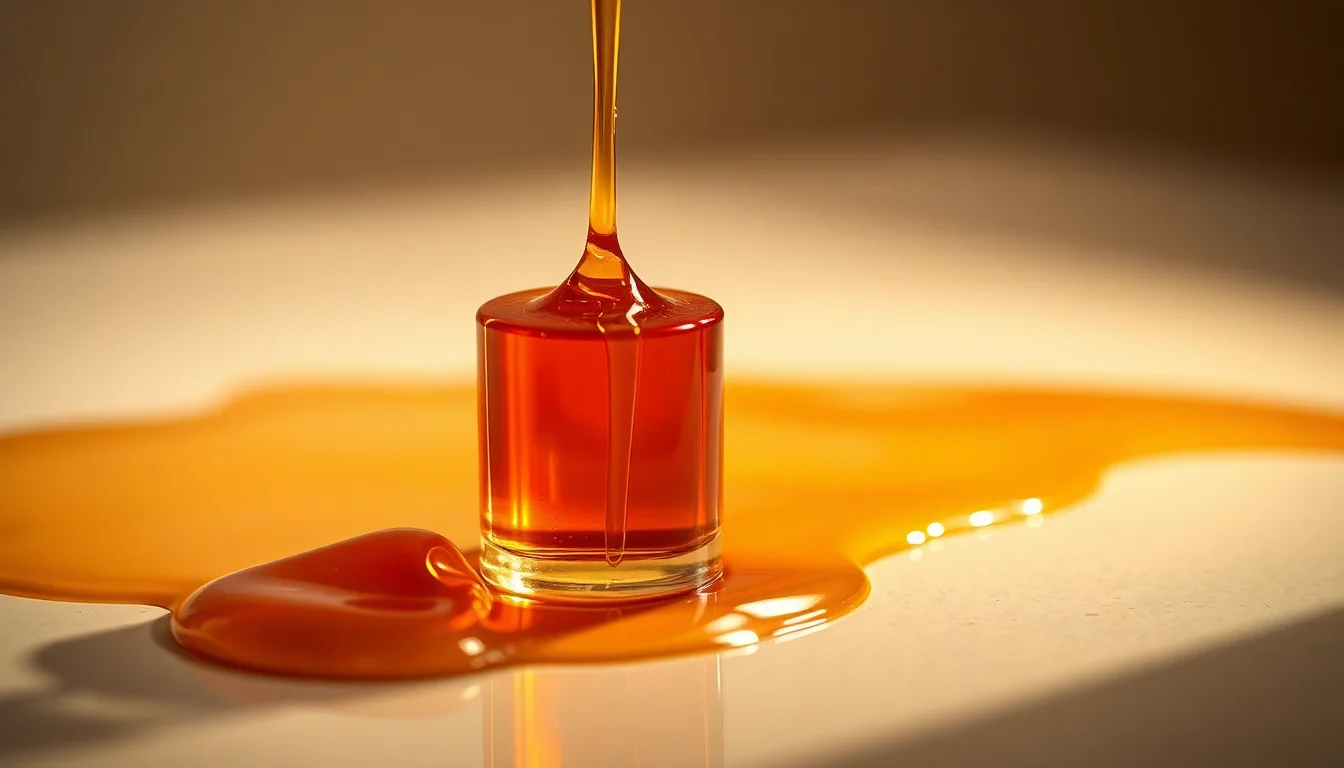
Hydrolyzed starch syrups are thick, sweet liquids derived from breaking down starches (often corn or wheat) into simpler sugars. You encounter them in food products like candies, baked goods, and some beverages. As a fragrance ingredient, they provide subtle sweetness and texture in gourmand and oriental perfumes. While primarily a food ingredient, their mild caramelized sweetness makes them useful for perfumers creating edible-smelling fragrances. They help bridge sweet and savory notes in complex compositions.
Safety Profile
GENERALLY SAFEWhat Does Syrups, hydrolyzed starch Smell Like?
Hydrolyzed starch syrups offer a muted, grain-derived sweetness reminiscent of baked goods fresh from the oven. The aroma unfolds as a warm, slightly caramelized malt note with a subtle bread-like undertone. Unlike pure sugars, it carries a starchy depth that prevents cloying sweetness. In drydown, it leaves a faint cereal impression that blends well with vanilla and spice accords. The overall effect is comforting and edible without being sugary—like the scent of a bakery at dawn when the first loaves are cooling.
Chemistry, Properties & Perfumer Guide
The Chemistry
Hydrolyzed starch syrups are complex mixtures produced by partial enzymatic or acid hydrolysis of starch polymers (typically from corn, wheat, or potatoes). The process breaks α-1,4 and α-1,6 glycosidic bonds to yield oligosaccharides of varying chain lengths. Commercial products contain maltose, glucose, and higher saccharides in ratios dependent on the degree of hydrolysis (DE value). No single molecular structure defines these materials—they exist as dynamic equilibria of carbohydrate species whose composition affects viscosity and sweetness profile.
Physical & Chemical Properties
| Appearance | Clear to amber viscous liquid |
|---|---|
| Solubility | Fully water soluble |
| Viscosity | High (varies by DE value) |
Perfumer Guide
| Application | Typical % | Range | Notes |
|---|---|---|---|
| Gourmand Fragrances | 2-5% | Up to 10% | Adds edible warmth |
| Functional Fragrances | 1-3% | Up to 5% | Masking agent |
| Home Fragrance | 3-7% | Up to 12% | Comforting note |
Classic Accords
Tip: Pre-dilute in water or alcohol to manage viscosity before adding to fragrance bases.
Alternatives & Comparisons
Safety, Regulatory & Sustainability
⚠ Regulatory Disclaimer
General reference only. Consult current IFRA Standards Library before formulating.
IFRA Status
No IFRA restrictions – food-grade material with extensive safety data.
RIFM Assessment
Considered safe for use in fragrances at typical levels based on food safety data.
Sustainability
Most hydrolyzed starch syrups derive from commodity crops like corn, raising questions about agricultural land use. However, they represent efficient utilization of starch byproducts. Synthetic production avoids deforestation concerns associated with some natural sweet materials. Biodegradability is excellent due to carbohydrate structure, though high biological oxygen demand requires proper wastewater management in production facilities.
Explore Syrups, hydrolyzed starch
Browse essential oils and aroma compounds.
Browse on iHerb →Affiliate disclosure: we may earn a small commission at no extra cost to you.
References
- Food Chemicals Codex (2023). Starch Hydrolysates Monograph.
- BeMiller, J.N. (2018). Carbohydrate Chemistry for Food Scientists. Elsevier.
Data: PubChem (NIH), PubMed, RIFM, IFRA. Last reviewed: Apr 2026.
Report a data errorIngredient Data Sheet
CAS 8029-43-4Physical data: PubChem (NIH/NLM), U.S. EPA CompTox Dashboard, EPA OPERA models, RDKit. Odor & flavor: Arctander (Perfume & Flavor Chemicals), Fenaroli's Handbook of Flavor Ingredients, Leffingwell. Thresholds: van Gemert (Compilations of Odour Threshold Values). Regulatory: IFRA Standards 51st, FEMA GRAS. Trade names: Surburg (Common Fragrance & Flavor Materials). All data compiled and cross-referenced for perfumertools.com.
Related Research
- Tricyclo[5.2.1.02,6]dec-4-en-8-yl acetate (CAS 2500-83-6) — Woody Middle to base Note Fragrance Ingredient
- 2-Dodecenal (CAS 4826-62-4) — Citrus Top to mid Note Fragrance Ingredient
- 2-Benzyl-2-methylbut-3-enenitrile (CAS 97384-48-0) — Green Top to Middle Note Fragrance Ingredient
- (1,7,7-Trimethylbicyclo[2.2.1]hept-2-yl)cyclohexan-1-ol (CAS 68877-29-2) — Woody Middle to Base Note Fragrance Ingredient