
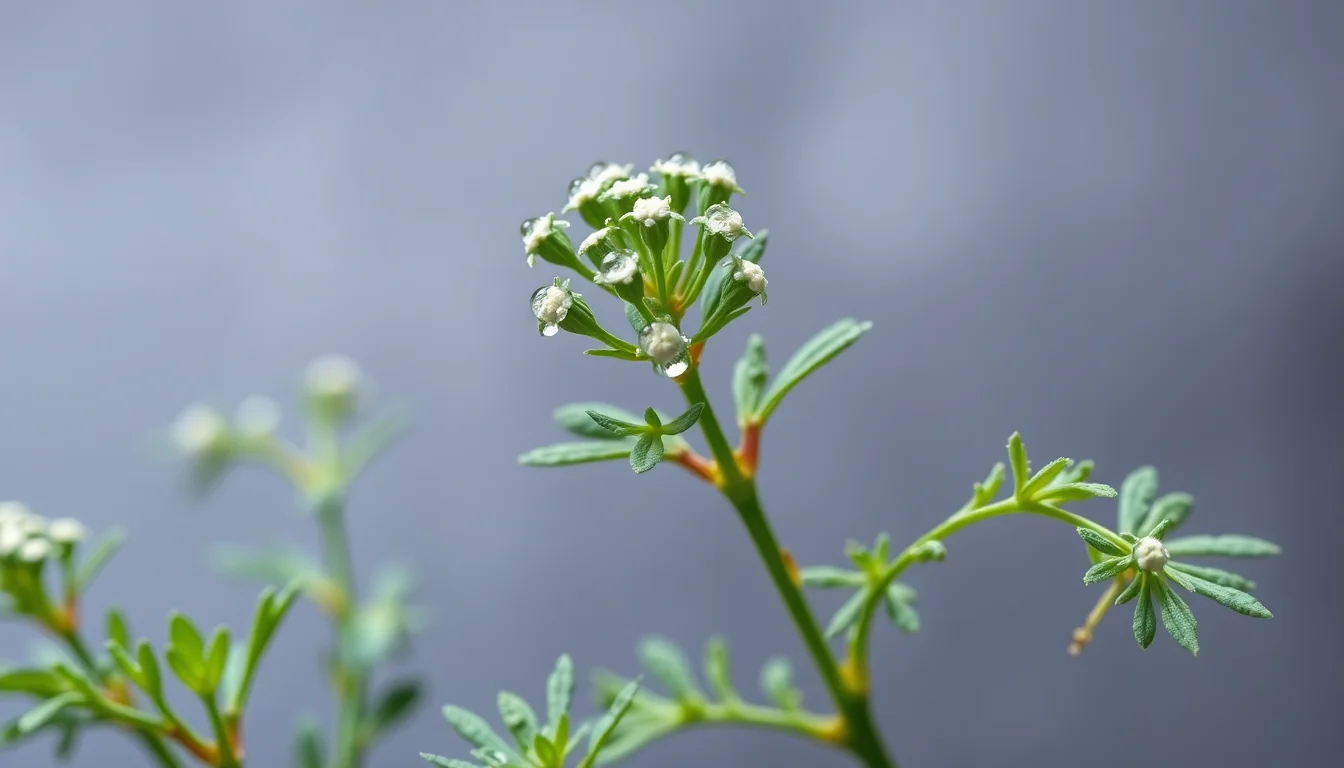
Yarrow oil (CAS 8022-07-09) — Green Top to middle Note Fragrance Ingredient
Yarrow oil
CAS 8022-07-09
What Is Yarrow oil?
Yarrow oil is a steam-distilled essential oil from the yarrow plant (Achillea millefolium). People encounter it in aromatherapy, natural perfumery, and herbal medicine. It matters because it has a complex, herbaceous aroma with historical medicinal uses and modern applications in fragrance blending for its green, slightly bitter character.
Safety Profile
USE WITH AWARENESSWhat Does Yarrow oil Smell Like?
Yarrow oil opens with a sharp, herbaceous punch reminiscent of crushed leaves and damp meadows. The heart reveals a complex interplay of camphoraceous brightness and subtle floral undertones, like wildflowers hidden in tall grass. Dry-down brings a mildly bitter, hay-like earthiness that lingers close to the skin. The overall effect is green and medicinal, yet with an unexpected softness that prevents it from being harsh.
In Famous Fragrances
Fragrance associations may not reflect actual formulations.
Yarrow oil provides the sharp green opening that defines this modern herbal fragrance, contrasting with sweeter lavender and citrus notes.
Used sparingly to add an authentic medicinal edge to this forest-inspired composition, balancing woody and earthy accords.
Chemistry, Properties & Perfumer Guide
The Chemistry
Yarrow oil contains over 100 compounds, primarily monoterpenes and sesquiterpenes including chamazulene (blue-colored), α-pinene, β-pinene, and sabinene. The exact composition varies significantly based on growing conditions and distillation methods. Chamazulene forms during distillation from matricin, giving some batches a distinctive blue color and enhanced anti-inflammatory properties.
Physical & Chemical Properties
| Appearance | Pale yellow to blue-green liquid |
|---|---|
| Specific Gravity | 0.89-0.93 |
| Refractive Index | 1.47-1.53 |
Perfumer Guide
| Application | Typical % | Range | Notes |
|---|---|---|---|
| Aromatherapy | 1-2% | Up to 5% | Dilution recommended for direct skin contact |
| Fine Fragrance | 0.5-1% | Up to 3% | Used as herbal accent |
Classic Accords
Tip: Use sparingly in fougère compositions to add authentic herbal complexity without overwhelming the blend.
Alternatives & Comparisons
When a softer, sweeter herbal character is desired while maintaining some medicinal qualities.
For a more bitter, absinthe-like herbal note with similar green characteristics.
Safety, Regulatory & Sustainability
⚠ Regulatory Disclaimer
General reference only. Consult current IFRA Standards Library before formulating.
IFRA Status
No specific restrictions under current IFRA standards (as of Amendment 49).
EU Allergen Declaration
None currently listed under EU allergen regulations.
RIFM Assessment
Recognized as safe for use in fragrance when properly diluted. No significant safety concerns at typical usage levels.
Sustainability
Yarrow grows wild in many regions and is relatively easy to cultivate sustainably. Organic farming methods are increasingly common. The plant’s hardiness means it requires minimal water or pesticides. However, wild harvesting should be managed carefully to prevent overharvesting of native populations.
Explore Yarrow oil
Browse essential oils and aroma compounds.
Browse on iHerb →Affiliate disclosure: we may earn a small commission at no extra cost to you.
References
- Chandler, R.F. et al. (1982). Herbal remedies of the maritime Indians. Journal of Ethnopharmacology. PMID 7109668
- PubChem Compound Summary for Achillea millefolium extract PubChem
Data: PubChem (NIH), PubMed, RIFM, IFRA. Last reviewed: Apr 2026.
Report a data error
![Benzenesulfonic acid, 3,3′-[(9,10-dihydro-9,10-dioxo-1,4-anthracenediyl)diimino]bis[2,4,6-trimethyl-, sodium salt (1:2) (CAS 4474-24-2) — Citrus Not applicable Note Fragrance Ingredient](https://thegoodscents.company/wp-content/uploads/2026/04/benzenesulfonic-acid-3-3-039-1-1-768x439.webp)
![Benzenemethanaminium, N-ethyl-N-[4-[[4-[ethyl[(3-sulfophenyl)methyl]amino]phenyl](2-sulfophenyl)met -hylene]-2,5-cyclohexadien-1-ylidene]-3-sulfo-, inner salt, disodium salt (CAS 3844-45-9) — Citrus N/A Note Fragrance Ingredient](https://thegoodscents.company/wp-content/uploads/2026/04/benzenemethanaminium-n-ethyl-n-4-4-ethyl-1-3-768x439.webp)


