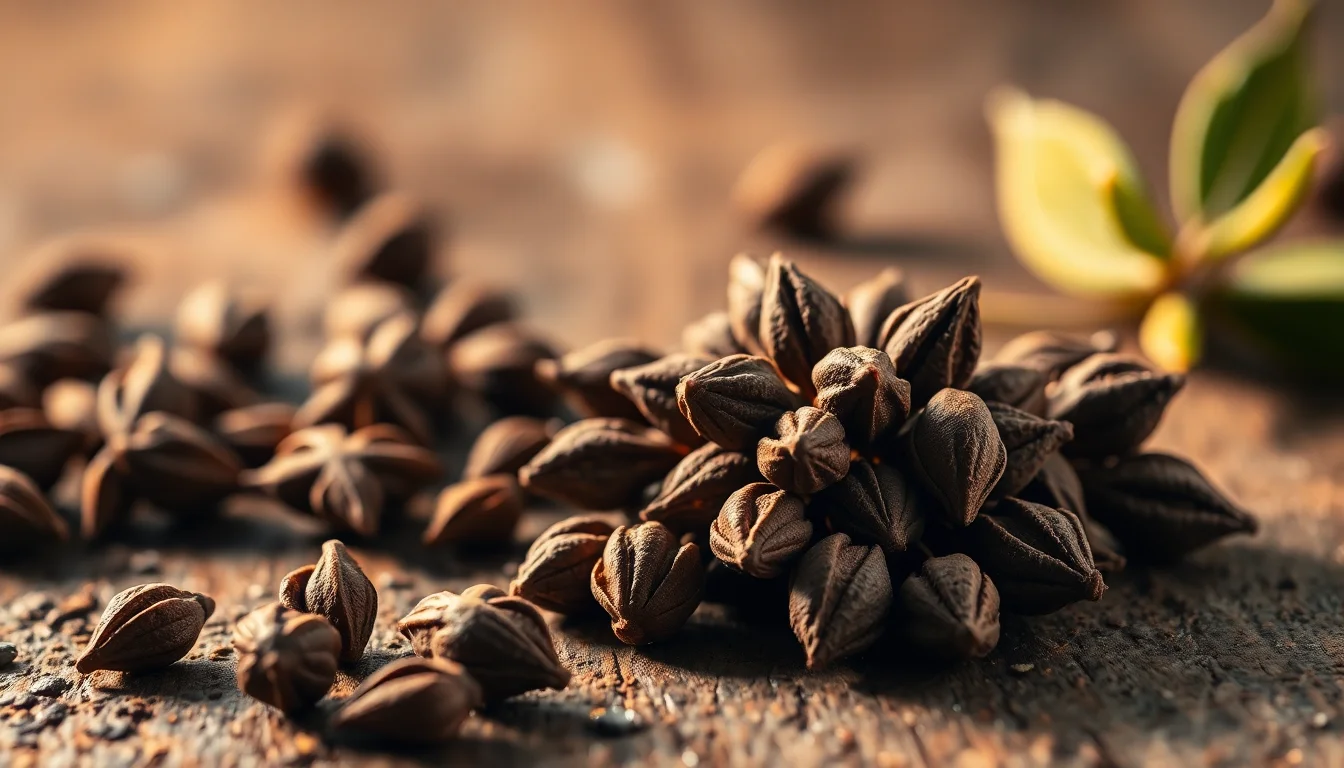
Clove Bud Oil (CAS 8000-34-8) — Spicy Top Note Fragrance Ingredient
Clove Bud Oil
CAS 8000-34-8
What Is Clove Bud Oil?
Clove bud oil is a warm, spicy essential oil extracted from the flower buds of the clove tree. People encounter it in dental products, perfumes, and holiday spices. This oil matters because it provides a distinctive, comforting aroma and has been used for centuries in traditional medicine and flavoring.
Safety Profile
USE WITH AWARENESSWhat Does Clove Bud Oil Smell Like?
Clove bud oil bursts with an intense, warm, and spicy aroma, reminiscent of holiday baking. Its top note is sharp and slightly medicinal, evolving into a rich, sweet, and woody heart. The dry-down reveals a deep, balsamic warmth with hints of vanilla and cinnamon. This oil is potent and long-lasting, adding depth and complexity to fragrances.
Scent Profile
In Famous Fragrances
Fragrance associations may not reflect actual formulations.
Clove bud oil adds a spicy, exotic warmth to this iconic oriental fragrance, enhancing its rich, opulent character.
Used for its spicy depth, clove bud oil complements the cinnamon and floral notes in this bold, sensual perfume.
Clove bud oil contributes a sharp, spicy edge to this masculine fragrance, balancing its sweet, powdery heart.
This classic scent uses clove bud oil for its warm, spicy aroma, creating a timeless, luxurious bath oil turned perfume.
Clove bud oil is key to the explosive spicy accord in this modern masculine fragrance, adding intensity and warmth.
Chemistry, Properties & Perfumer Guide
The Chemistry
Clove bud oil is primarily composed of eugenol (70-90%), a phenylpropene derivative responsible for its characteristic spicy aroma. Other significant constituents include eugenyl acetate, β-caryophyllene, and small amounts of vanillin. The oil is obtained through steam distillation of dried clove buds (Syzygium aromaticum). Eugenol’s phenolic structure contributes to its antiseptic properties and potential skin sensitivity. The oil’s composition can vary based on geographic origin and extraction methods.
Chemical Composition
Physical & Chemical Properties
| Boiling Point | 254 °C |
|---|---|
| Density | 1.038-1.050 g/cm³ |
| Refractive Index | 1.527-1.535 |
| Flash Point | 104 °C |
Key Constituent Properties
| Constituent | CAS | MW | BP °C | XLogP | Vapor P. |
|---|---|---|---|---|---|
| Eugenol | 97-53-0 | 164.20 | 254 | 2.3 | 0.01 mmHg |
| Eugenyl Acetate | 93-28-7 | 206.24 | 282 | 2.9 | 0.001 mmHg |
| β-Caryophyllene | 87-44-5 | 204.36 | 262 | 4.6 | 0.01 mmHg |
Perfumer Guide
| Application | Typical % | Range | Notes |
|---|---|---|---|
| Fine Fragrance | 0.5-2% | Up to 5% | Adds spicy warmth |
| Cosmetics | 0.1-0.5% | Up to 1% | Limited due to sensitivity |
| Flavorings | 0.01-0.1% | Up to 0.5% | Potent flavor enhancer |
| Aromatherapy | 1-2% | Up to 3% | Dilute in carrier oils |
Classic Accords
Tip: Use clove bud oil sparingly to avoid overpowering other notes; it works well with sweet and woody ingredients.
Alternatives & Comparisons
Pure eugenol offers a cleaner clove scent without the complexity of the full oil, useful when precise control is needed.
A milder alternative with similar spicy notes but less intensity, suitable for softer formulations.
Provides a cinnamon-like spice that can substitute for clove in some warm, festive accords.
Safety, Regulatory & Sustainability
⚠ Regulatory Disclaimer
General reference only. IFRA, REACH, EU Cosmetics Regulation standards update periodically. Consult current IFRA Standards Library before formulating. Not legal or regulatory advice.
IFRA Status
IFRA restricts clove bud oil to 0.5% in leave-on products due to potential sensitization (Amendment 49). No restrictions for rinse-off products.
EU Allergen Declaration
Eugenol is listed as an EU allergen; must be declared when present at ≥0.001% in leave-on or ≥0.01% in rinse-off products.
GHS Classification
RIFM Assessment
RIFM assessment confirms clove bud oil’s safety at current IFRA limits, with recommended precautions for sensitization potential.
Sustainability
Clove bud oil is sustainably harvested from tropical clove trees, primarily in Indonesia and Madagascar. The industry supports local economies, but overharvesting can be a concern. Synthetic eugenol offers an alternative with reduced environmental impact, though lacking the full complexity of natural oil.
Explore Clove Bud Oil
Browse essential oils and aroma compounds.
Browse on iHerb →Affiliate disclosure: we may earn a small commission at no extra cost to you.
References
- PubChem. Clove Oil. National Library of Medicine. PubChem
- IFRA Standards Library. Amendment 49. IFRA
- RIFM Monograph: Clove Bud Oil. Food and Chemical Toxicology, 2016. DOI:10.1016/j.fct.2016.04.008
Data: PubChem (NIH), PubMed, RIFM, IFRA. Last reviewed: Mar 2026.
Report a data errorIngredient Data Sheet
CAS 8000-34-8Odor & Flavor
| Clove bud oil is obtained by the distillation of buds with water or steam. The yield is typically between 15 and 18%, but is dependent on the quality of the buds, precautions exercised and distiller efficiency. Of the clove oils, clove bud oil is the most expensive. Approximately 50 tons is produced each year in Madagascar. The oil has the characteristic clove-like aroma and a burning, spicy flavor.📖 Fenaroli |
Regulatory Status
| IOFI Classification | Natural📖 Fenaroli |
Physical data: PubChem (NIH/NLM), U.S. EPA CompTox Dashboard, EPA OPERA models, RDKit. Odor & flavor: Arctander (Perfume & Flavor Chemicals), Fenaroli's Handbook of Flavor Ingredients, Leffingwell. Thresholds: van Gemert (Compilations of Odour Threshold Values). Regulatory: IFRA Standards 51st, FEMA GRAS. Trade names: Surburg (Common Fragrance & Flavor Materials). All data compiled and cross-referenced for perfumertools.com.
Related Research
- Asafoetida absolute (CAS 9000-04-08) — Spicy Base Note Fragrance Ingredient
- Farnesene (CAS 502-61-4) — Green Base Note Fragrance Ingredient
- 5,6,7-Trimethylocta-2,5-dien-4-one (CAS 358331-95-0) — Woody Middle to base Note Fragrance Ingredient
- Guar gum, 2-hydroxy-3-(trimethylammonio)propyl ether, chloride (CAS 65497-29-2) — Citrus Not applicable Note Fragrance Ingredient
![Methyl 4(or 1)-isopropyl-1(or 4)-methylbicyclo[2.2.2]oct-5-ene-2-carboxylate (CAS 68966-86-9) — Green Middle Note Fragrance Ingredient](https://thegoodscents.company/wp-content/uploads/2026/04/methyl-4-1-768x439.webp)