Isolongifolene ketone (CAS 23787-90-8) — Woody Base Note Fragrance Ingredient
Isolongifolene ketone
CAS 23787-90-8
What Is Isolongifolene ketone?
Isolongifolene ketone is a synthetic fragrance ingredient used in perfumes and scented products. It contributes woody, ambery notes that add depth and longevity to fragrances. This molecule matters because it helps create sophisticated, long-lasting scent profiles in modern perfumery, often serving as a base note that anchors other ingredients.
Safety Profile
GENERALLY SAFEWhat Does Isolongifolene ketone Smell Like?
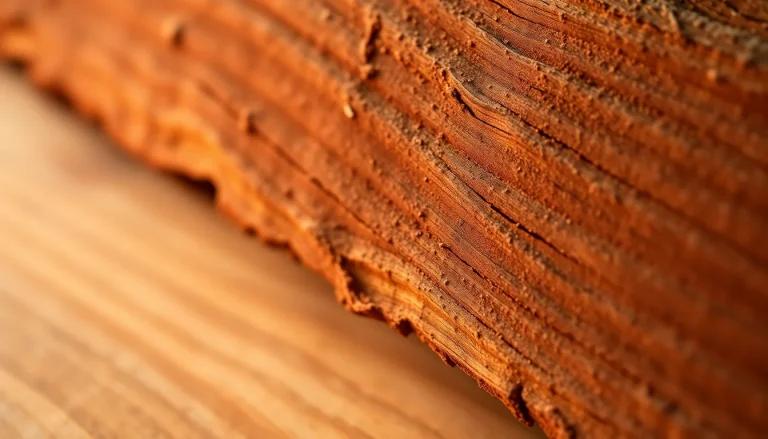
Isolongifolene ketone unfolds with an initial woody-amber character reminiscent of aged cedar chests and sun-warmed tree resin. The scent evolves into a complex heart with subtle leathery undertones and a faintly sweet, almost vanillic nuance. In dry-down, it reveals remarkable tenacity, leaving a refined woody trail that blends seamlessly with musks and other base materials. The overall effect is like polished antique wood with a whisper of dry tobacco leaves.
2D Molecular Structure
SMILES: CC1(C)C2CCC3(C2)C1C(=O)CCC3(C)C
Chemistry, Properties & Perfumer Guide
The Chemistry
Isolongifolene ketone belongs to the bicyclic sesquiterpene ketone class, derived from isolongifolene through oxidation. While not found in nature, it shares structural similarities with natural terpenoids. Industrial synthesis typically involves the oxidation of isolongifolene, a sesquiterpene hydrocarbon obtained from turpentine fractions. The ketone group introduces polarity while maintaining the molecule’s hydrophobic character, contributing to its excellent substantivity in fragrance applications.
Physical & Chemical Properties
Perfumer Guide
| Application | Typical % | Range | Notes |
|---|---|---|---|
| Fine Fragrance | 1-3% | Up to 5% | Base note fixative |
| Home Care | 0.1-0.5% | Up to 1% | Longevity booster |
Classic Accords
Tip: Use to anchor citrus top notes in masculine fragrances.
Alternatives & Comparisons
More powerful woody-amber with similar substantivity but higher impact at lower doses.
Safety, Regulatory & Sustainability
⚠ Regulatory Disclaimer
General reference only. Consult current IFRA Standards Library before formulating.
IFRA Status
No IFRA restrictions currently apply.
RIFM Assessment
Not currently evaluated by RIFM.
Sustainability
As a synthetic material, isolongifolene ketone doesn’t require harvesting of natural resources. Its production from turpentine derivatives utilizes byproducts of the paper industry. The synthesis route is relatively efficient, though energy-intensive distillation steps are required. Future green chemistry approaches may improve its environmental profile.
Explore Isolongifolene ketone
Browse essential oils and aroma compounds.
Browse on iHerb →Affiliate disclosure: we may earn a small commission at no extra cost to you.
Perfumer’s Notes
MW: 220.35
LogP: 4
Physicochemical Properties
DTXSID: DTXSID2047228
Physical Properties
| Molecular Weight | 220.356 g/mol🔬 EPA CompTox |
| Density | 1 g/cm^3🔬 EPA CTX |
| Boiling Point | 295 °C🔬 EPA CTX |
| Melting Point | 57.883 °C📊 OPERA |
| Flash Point | 117 °C🔬 EPA CTX |
| Refractive Index | 1.509 Dimensionless📊 OPERA |
| Molar Volume | 219.2 cm^3/mol📊 OPERA |
Partition & Solubility
| LogP (Octanol-Water) | 4.111 Log10 unitless📊 OPERA |
| LogD (pH 5.5) | 4.111 Log10 unitless📊 OPERA |
| LogD (pH 7.4) | 4.111 Log10 unitless📊 OPERA |
| LogKoa (Octanol-Air) | 7.26 Log10 unitless📊 OPERA |
| Water Solubility | 0 mol/L🔬 EPA CTX |
| Henry's Law Constant | 0 atm-m3/mole📊 OPERA |
Transport Properties
| Vapor Pressure | 0.005 mmHg🔬 EPA CTX |
| Surface Tension | 34.347 dyn/cm📊 OPERA |
| Thermal Conductivity | 110.947 mW/(m*K)📊 OPERA |
Molecular Descriptors
| Topological Polar Surface Area | 17.07 Ų💻 Computed |
| H-Bond Donors | 0 count💻 Computed |
| H-Bond Acceptors | 1 count💻 Computed |
| Rotatable Bonds | 0 count💻 Computed |
| Aromatic Rings | 0 count💻 Computed |
| Molar Refractivity | 65.464 cm^3/mol📊 OPERA |
| Polarizability | 25.952 Å^3📊 OPERA |
Data Sources:
🔬 EPA Experimental data from U.S. EPA CompTox Chemicals Dashboard & CTX APIs. 📊 OPERA Predicted using EPA's OPERA QSAR models. 💻 Computed Calculated from SMILES using RDKit.
Related Research