Beeswax (CAS 8012-89-3) — Sweet Fragrance Ingredient
Beeswax
CAS 8012-89-3
What Is Beeswax?
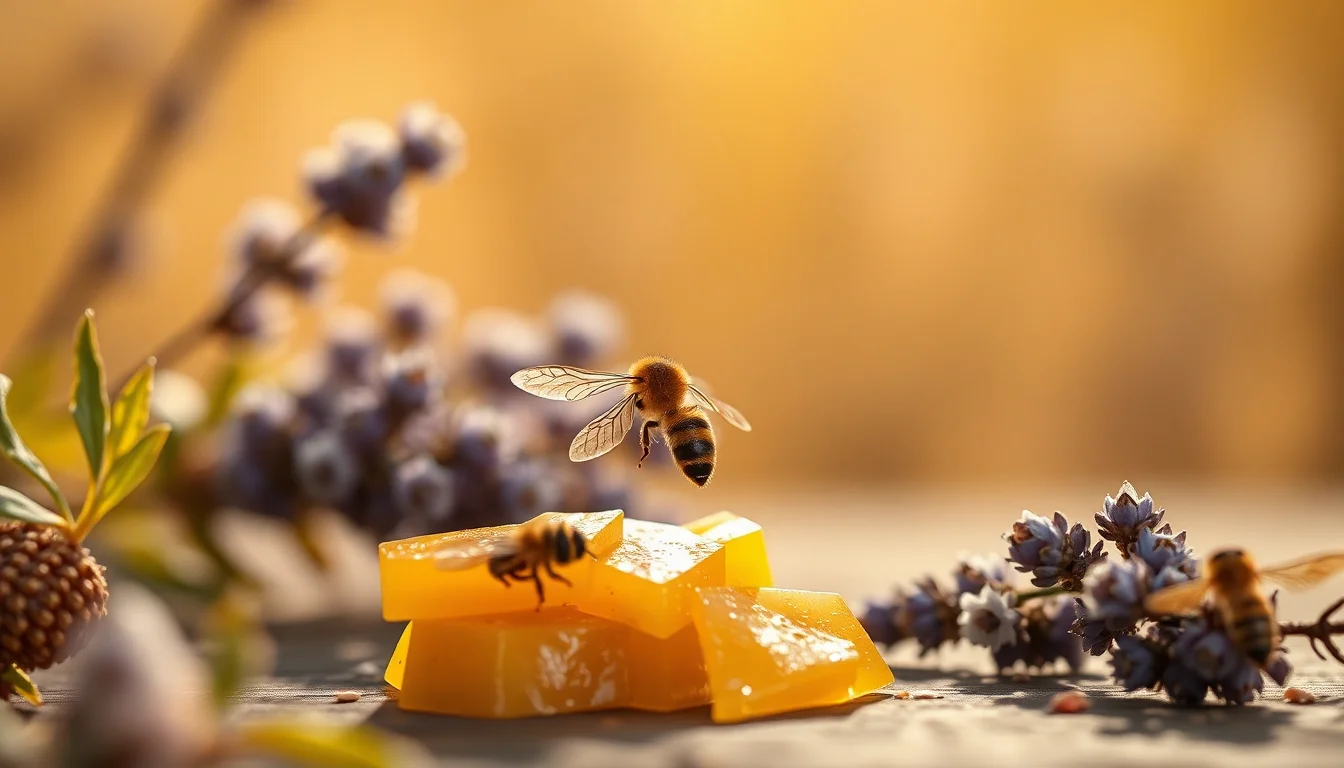
Beeswax is a natural substance produced by honeybees, commonly found in candles, cosmetics, and furniture polish. Its warm, honey-like aroma evokes feelings of comfort and nostalgia. Beeswax matters because it’s a sustainable, biodegradable material that supports beekeeping industries while offering unique olfactory properties difficult to replicate synthetically.
Safety Profile
GENERALLY SAFEWhat Does Beeswax Smell Like?
Beeswax opens with an immediate burst of honeyed sweetness – like biting into a fresh honeycomb dripping with golden nectar. The heart reveals subtle floral undertones from trapped pollen, with a waxy, slightly animalic nuance reminiscent of the hive itself. Dry-down is remarkably persistent, leaving a comforting skin-like warmth that blends beautifully with vanilla and amber materials.
Scent Profile
In Famous Fragrances
Fragrance associations may not reflect actual formulations.
Uses beeswax to create a sun-baked amber effect, blending its honeyed warmth with spices and dry woods for a desert-like mirage.
Features beeswax prominently to recreate the sensory experience of a bustling hive, complete with pollen and propolis accents.
Chemistry, Properties & Perfumer Guide
The Chemistry
Beeswax is primarily composed of esters of fatty acids and long-chain alcohols (70-80%), with hydrocarbons (10-15%), free acids (10-15%), and trace pigments. The exact composition varies by bee species and local flora. Worker bees secrete wax from abdominal glands, which hardens into scales when exposed to air. Unlike synthetic waxes, beeswax contains hundreds of minor constituents that contribute to its complex odor profile.
Physical & Chemical Properties
| Melting Point | 62-65 °C |
|---|---|
| Density | 0.95 g/cm³ |
| Acid Value | 17-24 mg KOH/g |
Perfumer Guide
| Application | Typical % | Range | Notes |
|---|---|---|---|
| Candles | 100% | N/A | Primary material for slow-burning, naturally scented candles |
| Cosmetics | 5-15% | 1-30% | Provides texture and emollient properties |
| Fine Fragrance | 0.5-3% | Up to 5% | Adds warm, skin-like undertones |
Classic Accords
Tip: Melt beeswax slowly below 65°C to preserve delicate aromatic compounds.
Alternatives & Comparisons
Plant-derived alternative with higher melting point but less honey character, used when vegan formulations are required.
Safety, Regulatory & Sustainability
⚠ Regulatory Disclaimer
General reference only. IFRA, REACH, EU Cosmetics Regulation standards update periodically. Consult current IFRA Standards Library before formulating. Not legal or regulatory advice.
IFRA Status
No restrictions – IFRA 49th Amendment exempts natural beeswax
EU Allergen Declaration
None
RIFM Assessment
RIFM considers natural beeswax safe as used in fragrance applications.
Sustainability
Beeswax production supports vital pollination ecosystems when harvested ethically. Sustainable beekeeping practices maintain hive health while collecting excess wax. Synthetic alternatives lack the carbon sequestration benefits of apiculture. However, climate change impacts on bee populations require careful sourcing considerations.
Explore Beeswax
Browse essential oils and aroma compounds.
Browse on iHerb →Affiliate disclosure: we may earn a small commission at no extra cost to you.
References
- Bogdanov S. (2004). Beeswax: Production, Properties and Applications. Bee Product Science.
- PubChem Beeswax CID 19825
Data: PubChem (NIH), PubMed, RIFM, IFRA. Last reviewed: Mar 2026.
Report a data errorIngredient Data Sheet
CAS 8012-89-3Odor & Flavor
| Crude yellow beeswax is harvested together with honey and represents a secondary secretion of the bee. Once the honey is recovered from the honeycomb by draining the cells, the wax combs are washed with water, melted and poured into molds to harden. The wax is refined by melting in hot water to which sulfuric acid or alkali may be added to extract impurities. The resulting wax is referred to as yellow beeswax. Yellow beeswax contains cerolein, a mixture of fatty acids and soluble in hot alcohol and slightly soluble in cold alcohol; myricyl alcohol and myricyl palmitate, insoluble in alcohol. Beeswax is produced worldwide with the same chemical composition. The odor may vary slightly, depending on the source. Derivatives: Beeswax absolute, prepared by alcoholic extraction of the raw wax, is a waxy solid having a light-yellow color and a very mild, sweet odor with a waxy undertone.📖 Fenaroli |
Physical data: PubChem (NIH/NLM), U.S. EPA CompTox Dashboard, EPA OPERA models, RDKit. Odor & flavor: Arctander (Perfume & Flavor Chemicals), Fenaroli's Handbook of Flavor Ingredients, Leffingwell. Thresholds: van Gemert (Compilations of Odour Threshold Values). Regulatory: IFRA Standards 51st, FEMA GRAS. Trade names: Surburg (Common Fragrance & Flavor Materials). All data compiled and cross-referenced for perfumertools.com.
Related Research
- Muguet, microwave extraction (CAS 84082-46-2) — Floral Heart Note Fragrance Ingredient
- 3,4,5,6,6-Pentamethylheptan-2-ol (CAS 87118-95-4) — Woody Base Note Fragrance Ingredient
- Isophytol (CAS 505-32-8) — Green Middle Note Fragrance Ingredient
- 1,3,3-Trimethyl-2-norbornanyl acetate (CAS 13851-11-1) — Woody Top to Middle Note Fragrance Ingredient

![3-[trans-4-(2-methylpropyl)cyclohexyl]propanal (CAS 1315250-67-9) — Woody Middle Note Fragrance Ingredient](https://thegoodscents.company/wp-content/uploads/2026/04/3-trans-4-1-1-768x439.webp)