Cherry essence oil (CAS 85566-22-9) — Sweet Top to Heart Note Fragrance Ingredient
Cherry essence oil
CAS 85566-22-9
What Is Cherry essence oil?
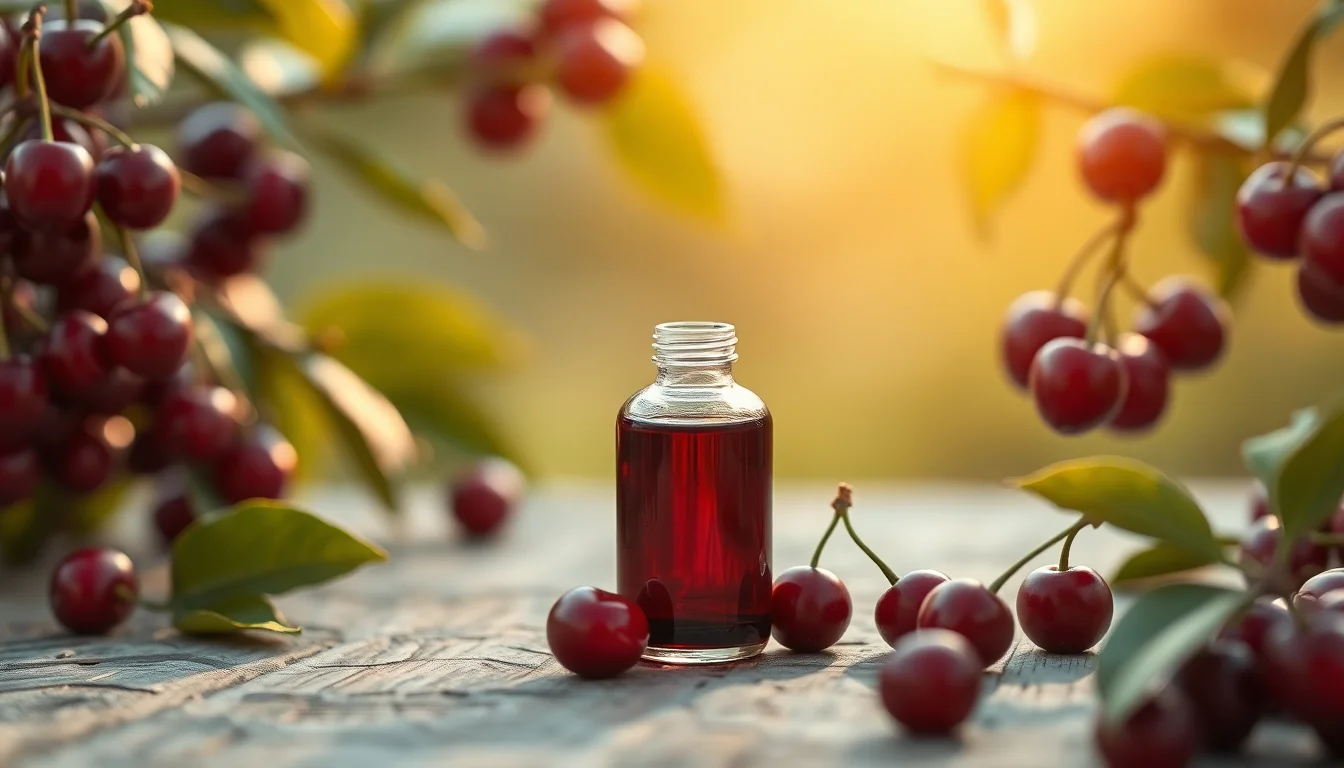
Cherry essence oil is a concentrated flavor and fragrance ingredient derived from cherries. People encounter it in fruit-flavored candies, desserts, and some perfumes that aim for a sweet, fruity character. This essence captures the juicy, slightly tart quality of ripe cherries without being cloying. It matters because natural cherry notes are difficult to replicate – the oil provides an authentic alternative to synthetic cherry fragrances, allowing products to claim natural origin while delivering consistent performance.
Safety Profile
USE WITH AWARENESSWhat Does Cherry essence oil Smell Like?
A burst of ripe, sun-warmed cherries greets the nose – not the artificial maraschino type, but the deep, jammy sweetness of Bing cherries with a whisper of tartness. As it evolves, the fruit becomes more liqueur-like, taking on subtle almond facets from natural benzaldehyde. The dry-down reveals a soft woody-amber base that prevents the sweetness from becoming overwhelming. This is a juicy, mouthwatering note that behaves more like a top-to-heart note, lasting 2-3 hours on skin before fading into a delicate fruity musk.
In Famous Fragrances
Fragrance associations may not reflect actual formulations.
Cherry essence oil provides the photorealistic fruit core, balanced by bitter almond and boozy accords. The natural tartness prevents the gourmand from becoming too sweet.
Used sparingly to create the black cherry macaron accord, where it interacts with rose and licorice for a sophisticated gourmand effect.
Cherry essence forms the bright, youthful top note against a clean cotton base, creating a playful summer fruity-floral.
The essence’s natural liqueur-like quality is amplified with rum and vanilla for an adult cherry cordial interpretation.
Chemistry, Properties & Perfumer Guide
The Chemistry
Cherry essence oil is obtained through steam distillation or solvent extraction of Prunus avium fruits. The key aromatic compounds include benzaldehyde (almond-like), eugenol (spicy), and linalool (floral), with trace methyl salicylate adding wintergreen nuances. The balance of these components varies by cherry cultivar and extraction method. Modern CO2 extraction better preserves the delicate top notes compared to traditional steam distillation. Unlike synthetic cherry accords, the natural oil contains minor terpenes and esters that create dimensional fruitiness.
Physical & Chemical Properties
| Appearance | Clear pale yellow liquid |
|---|---|
| Specific Gravity | 0.950-0.980 |
| Refractive Index | 1.530-1.550 |
Perfumer Guide
| Application | Typical % | Range | Notes |
|---|---|---|---|
| Fine Fragrance | 0.5-2% | Up to 5% | Use sparingly to avoid candied effect |
| Candles | 3-5% | Up to 8% | Higher loads needed for throw |
| Flavorings | 0.1-0.5% | Up to 1% | Combine with vanilla for depth |
Classic Accords
Tip: Stabilize with 0.1% BHT to prevent oxidation of the delicate fruit esters.
Alternatives & Comparisons
The key almond-cherry molecule, but lacks the full fruit complexity. Use when cost is a factor or for abstract cherry notes.
Provides the jammy, cooked cherry aspect without fresh top notes. Useful in gourmand bases.
Safety, Regulatory & Sustainability
⚠ Regulatory Disclaimer
General reference only. Consult current IFRA Standards Library before formulating.
IFRA Status
Not restricted under current IFRA standards. Contains naturally occurring benzaldehyde which has a 0.5% limit when used as an isolated material.
EU Allergen Declaration
Contains benzaldehyde (≥0.001%) which must be declared under EU allergen labeling.
GHS Classification
RIFM Assessment
RIFM assessment confirms safe use at current industry levels. No significant phototoxicity or sensitization concerns at recommended concentrations.
Sustainability
Most cherry essence comes from European orchards where the pits are pressed for oil and the fruit pulp is used for juice production, creating a zero-waste stream. However, yield is low (0.01-0.03% of fruit weight), making it resource-intensive. Some producers are developing cell culture methods to create identical cherry essence without agricultural inputs. CO2 extraction has lower environmental impact than solvent methods.
Explore Cherry essence oil
Browse essential oils and aroma compounds.
Browse on iHerb →Affiliate disclosure: we may earn a small commission at no extra cost to you.
References
- Burdock, G.A. (2010). Fenaroli’s Handbook of Flavor Ingredients. CRC Press. ISBN 9781420090772
Data: PubChem (NIH), PubMed, RIFM, IFRA. Last reviewed: Apr 2026.
Report a data errorIngredient Data Sheet
CAS 85566-22-9Physical data: PubChem (NIH/NLM), U.S. EPA CompTox Dashboard, EPA OPERA models, RDKit. Odor & flavor: Arctander (Perfume & Flavor Chemicals), Fenaroli's Handbook of Flavor Ingredients, Leffingwell. Thresholds: van Gemert (Compilations of Odour Threshold Values). Regulatory: IFRA Standards 51st, FEMA GRAS. Trade names: Surburg (Common Fragrance & Flavor Materials). All data compiled and cross-referenced for perfumertools.com.
Related Research
- 6-Isopropyl-2(1H)-octahydronaphthalenone (CAS 34131-98-1) — Woody Base Note Fragrance Ingredient
- 6,6-Dimethoxy-2,5,5-trimethylhex-2-ene (CAS 67674-46-8) — Green Top Note Fragrance Ingredient
- Cinnamyl propionate (CAS 103-56-0) — Sweet Middle Note Fragrance Ingredient
- 2-Acetyl-3-Ethylpyrazine (CAS 32974-92-8) — Mid Note Fragrance Ingredient