Copaiba balsam (CAS 8013-97-6) — Woody Base Note Fragrance Ingredient
Copaiba balsam
CAS 8013-97-6
What Is Copaiba balsam?
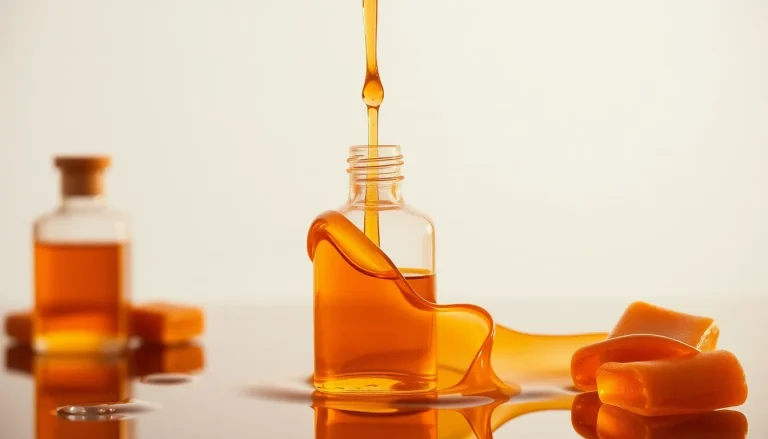
Copaiba balsam is a fragrant resin harvested from trees in the Amazon rainforest. You’ll find it in natural perfumes, soaps, and aromatherapy products where its warm, woody scent adds depth. This ingredient matters because it’s sustainably harvested by local communities and offers a complex, resinous alternative to synthetic base notes in fragrances.
Safety Profile
GENERALLY SAFEWhat Does Copaiba balsam Smell Like?
Copaiba balsam unfolds with an initial burst of peppery spice that quickly mellows into a velvety, honeyed woodiness. Imagine walking through a sun-warmed rainforest where damp earth meets vanilla-drizzled cedar. The dry-down reveals a creamy, almost balsamic sweetness reminiscent of aged cognac barrels, with lingering whispers of dried herbs and faint citrus rind.
In Famous Fragrances
Fragrance associations may not reflect actual formulations.
Copaiba provides the resinous backbone that mimics jungle humidity, blending with violet leaf to create a living rainforest effect.
Used sparingly to add creamy depth to the sandalwood, preventing the composition from becoming too powdery.
Chemistry, Properties & Perfumer Guide
The Chemistry
Copaiba balsam is a complex mixture of volatile oils and resin acids, primarily containing β-caryophyllene (a sesquiterpene) along with diterpenic acids. The resin is obtained by tapping Copaifera trees, with chemical composition varying by species and harvest location. Modern extraction typically uses steam distillation to separate the essential oil from the resinous portion.
Physical & Chemical Properties
| Appearance | Viscous yellow-brown liquid |
|---|---|
| Solubility | Soluble in alcohol, insoluble in water |
Key Constituent Properties
| Constituent | CAS | MW | BP °C | XLogP | Vapor P. |
|---|---|---|---|---|---|
| β-caryophyllene | 87-44-5 | 204.35 | 262 °C | 6.2 | 0.01 mmHg |
Perfumer Guide
| Application | Typical % | Range | Notes |
|---|---|---|---|
| Fine Fragrance | 1-3% | Up to 5% | Adds resinous depth |
| Aromatherapy | 2-5% | Up to 10% | Used for grounding blends |
Classic Accords
Tip: Warm in a water bath before measuring to improve viscosity and blending.
Alternatives & Comparisons
Offers similar resinous qualities with more citrusy top notes when a brighter profile is desired.
Safety, Regulatory & Sustainability
⚠ Regulatory Disclaimer
General reference only. Consult current IFRA Standards Library before formulating.
IFRA Status
No IFRA restrictions. Approved for all fragrance categories.
RIFM Assessment
Considered safe for current use levels based on RIFM evaluation of constituent compounds.
Sustainability
Copaiba is sustainably wild-harvested through tapping methods that don’t harm trees, providing economic incentives for rainforest conservation. Some producers implement fair-trade practices with indigenous harvesters. The resin yield per tree is relatively high compared to other aromatic resins.
Explore Copaiba balsam
Browse essential oils and aroma compounds.
Browse on iHerb →Affiliate disclosure: we may earn a small commission at no extra cost to you.
References
- Veiga Junior, V.F. & Pinto, A.C. (2002). The Copaifera L. genus. Química Nova. DOI: 10.1590/S0100-40422002000500016
Data: PubChem (NIH), PubMed, RIFM, IFRA. Last reviewed: Apr 2026.
Report a data error