Davana oil (CAS 8016-03-03) — Sweet Middle Note Fragrance Ingredient
Davana oil
CAS 8016-03-03
What Is Davana oil?
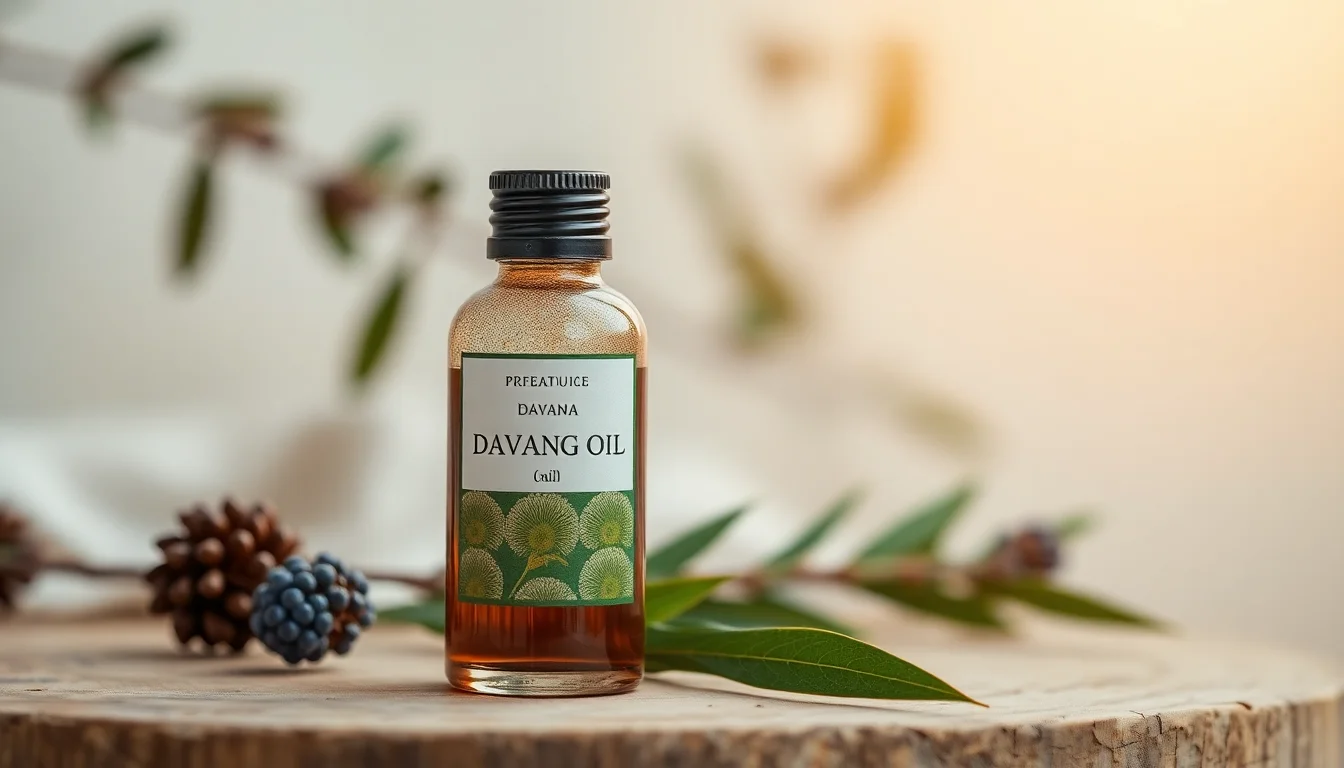
Davana oil is a prized essential oil derived from the Artemisia pallens plant, primarily grown in India. It’s often found in high-end perfumes and incense. This oil matters because its complex aroma transforms dramatically over time, evolving from fruity to woody notes, making it a perfumer’s delight for creating depth and intrigue in fragrances.
Safety Profile
GENERALLY SAFEWhat Does Davana oil Smell Like?
Davana oil opens with a burst of ripe apricot and dried fruit, like a sun-warmed orchard in late summer. Within minutes, it deepens into a honeyed, slightly herbaceous heart reminiscent of chamomile tea with a spoonful of blackberry jam. The dry-down reveals a whisper of fine leather and sandalwood, leaving a trail that feels both luxurious and mysterious.
In Famous Fragrances
Fragrance associations may not reflect actual formulations.
Davana’s fruity-leather duality amplifies the incense theme, creating a chiaroscuro effect between light and dark elements.
Used to bridge the salty ambergris and floral notes, adding a sun-drenched fruitiness to the mystical accord.
Chemistry, Properties & Perfumer Guide
The Chemistry
Davana oil contains over 100 identified compounds, primarily sesquiterpenes like davanone. The unique aroma profile stems from trace lactones and furan derivatives formed during careful steam distillation. The oil’s composition varies significantly based on harvest time, with early harvests yielding greener notes and late harvests producing richer fruity characteristics.
Physical & Chemical Properties
| Appearance | Pale yellow to amber liquid |
|---|---|
| Specific Gravity | 0.925 – 0.975 |
| Refractive Index | 1.485 – 1.505 |
Perfumer Guide
| Application | Typical % | Range | Notes |
|---|---|---|---|
| Fine Fragrance | 0.5-2% | Up to 5% | Adds fruity complexity without sweetness |
| Incense | 3-7% | Up to 10% | Enhances resinous notes with fruity undertones |
Classic Accords
Tip: Pair with ionones to enhance the jammy fruit character, or with vetiver to ground the leathery aspects.
Alternatives & Comparisons
Offers similar fruity-green facets but with more pronounced herbal characteristics, useful when less sweetness is desired.
Safety, Regulatory & Sustainability
⚠ Regulatory Disclaimer
General reference only. Consult current IFRA Standards Library before formulating.
IFRA Status
No IFRA restrictions. Listed as generally recognized as safe for use in fragrances.
EU Allergen Declaration
No EU allergen declaration required.
RIFM Assessment
RIFM assessment confirms safe use at current industry levels.
Sustainability
Davana is cultivated through traditional farming methods in India, requiring careful hand-harvesting. Sustainable sourcing initiatives focus on supporting smallholder farmers and preventing overharvesting of wild plants. The oil’s potency means small quantities suffice, reducing environmental impact per kilo of finished product.
Explore Davana oil
Browse essential oils and aroma compounds.
Browse on iHerb →Affiliate disclosure: we may earn a small commission at no extra cost to you.
References
- Baser & Buchbauer (2016). Handbook of Essential Oils. CRC Press.
- Guenther (1952). The Essential Oils. D. Van Nostrand.
Data: PubChem (NIH), PubMed, RIFM, IFRA. Last reviewed: Apr 2026.
Report a data errorRelated Research
- Pepper, black, oleoresin (CAS 8002-56-0) — Spicy Top to Middle Note Fragrance Ingredient
- 1-Penten-3-ol (CAS 616-25-1) — Green Top Note Fragrance Ingredient
- Cyclohexanol, 5-methyl-2-(1-methylethenyl)- (CAS 7786-67-6) — Woody Middle Note Fragrance Ingredient
- 1-Penten-3-one, 1-(3,6-dimethyl-3-cyclohexen-1-yl)-2-methyl-, (1E)- (CAS 2639151-39-4) — Green Top to middle Note Fragrance Ingredient