Neryl formate (CAS 2142-94-1) — Floral Top Note Fragrance Ingredient
Neryl formate
CAS 2142-94-1
What Is Neryl formate?
Neryl formate is a synthetic fragrance ingredient used to add fresh, floral, and slightly fruity notes to perfumes and scented products. It’s commonly found in fine fragrances, body lotions, and soaps. This ester contributes a bright, uplifting quality that enhances floral compositions while providing stability and longevity.
Safety Profile
GENERALLY SAFEWhat Does Neryl formate Smell Like?
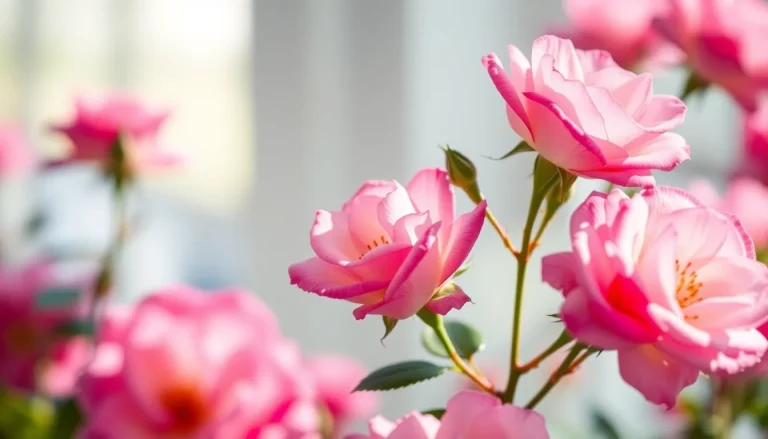
Neryl formate opens with a burst of crisp, green florals reminiscent of crushed rose stems and dewy petals. As it evolves, the scent reveals a delicate fruity nuance akin to ripe pears and lychee, balanced by a clean, soapy undertone. The dry-down leaves a subtle, powdery trail with whispers of neroli and citrus peel.
In Famous Fragrances
Fragrance associations may not reflect actual formulations.
Used to enhance the floral bouquet, adding a fresh, soapy nuance that balances the aldehydes and ylang-ylang.
Provides a crisp, green counterpoint to the rich floral heart, creating a more dynamic and modern floral accord.
2D Molecular Structure
SMILES: CC(C)=CCC\C(C)=C/COC=O
Chemistry, Properties & Perfumer Guide
The Chemistry
Neryl formate is an ester formed from neryl alcohol and formic acid. It belongs to the terpene ester class, known for their stability and pleasant floral-fruity odors. Synthesized through esterification, this molecule is valued for its ability to mimic natural floral notes while offering superior shelf-life compared to natural extracts.
Physical & Chemical Properties
| Boiling Point | 198 °C |
|---|---|
| Density | 0.865 g/cm³ |
Perfumer Guide
| Application | Typical % | Range | Notes |
|---|---|---|---|
| Fine Fragrance | 1-5% | Up to 10% | Floral fresh top note |
| Body Care | 0.5-2% | Up to 5% | Provides clean floral character |
Classic Accords
Tip: Use to add lift and freshness to heavy floral bases.
Alternatives & Comparisons
More citrusy and less floral, suitable when a sharper top note is desired.
Softer floral character with better longevity, ideal for heart note compositions.
Safety, Regulatory & Sustainability
⚠ Regulatory Disclaimer
General reference only. Consult current IFRA Standards Library before formulating.
IFRA Status
Not currently restricted by IFRA.
EU Allergen Declaration
Not listed as an EU allergen.
RIFM Assessment
RIFM assessment confirms safe use at current industry levels.
Sustainability
Synthetic production avoids agricultural impacts, though petrochemical feedstocks have carbon footprint considerations. Biocatalytic synthesis methods are being developed for greener production.
Explore Neryl formate
Browse essential oils and aroma compounds.
Browse on iHerb →Affiliate disclosure: we may earn a small commission at no extra cost to you.
References
- Bauer, K. et al. (2001). Common Fragrance and Flavor Materials. Wiley-VCH.
Data: PubChem (NIH), PubMed, RIFM, IFRA. Last reviewed: Apr 2026.
Report a data errorIngredient Data Sheet
CAS 2142-94-1Physical Properties
| Molecular Weight | 182.26 g/mol🔬 PubChem |
| LogP (Octanol-Water) | 3.5🔬 PubChem |
| Boiling Point | 113 °C🔬 EPA CompTox |
| log Kp (skin permeability) | -1.327💻 Calculated |
| SMILES | CC(=CCCC(=CCOC=O)C)C🔬 PubChem |
Volatility & Performance
| Fragrance Note | Top💻 Calculated |
Odor & Flavor
| Primary Descriptors | floralsweet• leffingwell |
| Functional Groups | etheralkene💻 RDKit |
| “Refreshing herbaceous-green and floral, delicately rosy (like hedgerose) odor of moderate tenacity.”📖 Arctander | |
| Neryl formate has a sweet, herbaceous, green, penetrating odor suggestive of neroli and rose. It has a sweet, tart and fruity flavor.📖 Fenaroli | |
Flavor Notes (Arctander)
| “Sweet and tart-fruity, rich flavor in concentrations near 10 ppm. The ester is also used in flavor compositions, mainly in imitation Apricot, Peach, Apple, Pineapple and in fruit and Citrus complexes at concentrations equal to 5 to 25 ppm in the finished product.”📖 Arctander |
Regulatory Status
| FEMA Number | FEMA 2776⚖️ FEMA GRAS |
| GRAS Status | Generally Recognized as Safe⚖️ FEMA GRAS |
| IOFI Classification | Nature Identical📖 Fenaroli |
Physical data: PubChem (NIH/NLM), U.S. EPA CompTox Dashboard, EPA OPERA models, RDKit. Odor & flavor: Arctander (Perfume & Flavor Chemicals), Fenaroli's Handbook of Flavor Ingredients, Leffingwell. Thresholds: van Gemert (Compilations of Odour Threshold Values). Regulatory: IFRA Standards 51st, FEMA GRAS. Trade names: Surburg (Common Fragrance & Flavor Materials). All data compiled and cross-referenced for perfumertools.com.
Physicochemical Properties
DTXSID: DTXSID701014544
Physical Properties
| Molecular Weight | 182.263 g/mol🔬 EPA CompTox |
| Density | 0.912 g/cm^3📊 OPERA |
| Boiling Point | 236.563 °C📊 OPERA |
| Melting Point | -57.523 °C📊 OPERA |
| Flash Point | 102.086 °C📊 OPERA |
| Refractive Index | 1.458 Dimensionless📊 OPERA |
| Molar Volume | 200.623 cm^3/mol📊 OPERA |
Partition & Solubility
| LogP (Octanol-Water) | 3.624 Log10 unitless📊 OPERA |
| LogD (pH 5.5) | 3.624 Log10 unitless📊 OPERA |
| LogD (pH 7.4) | 3.624 Log10 unitless📊 OPERA |
| LogKoa (Octanol-Air) | 5.78 Log10 unitless📊 OPERA |
| Water Solubility | 0.002 mol/L📊 OPERA |
| Henry's Law Constant | 0 atm-m3/mole📊 OPERA |
Transport Properties
| Vapor Pressure | 0.69 mmHg📊 OPERA |
| Viscosity | 2.078 cP📊 OPERA |
| Surface Tension | 28.299 dyn/cm📊 OPERA |
| Thermal Conductivity | 137.599 mW/(m*K)📊 OPERA |
Molecular Descriptors
| Topological Polar Surface Area | 26.3 Ų💻 Computed |
| H-Bond Donors | 0 count💻 Computed |
| H-Bond Acceptors | 2 count💻 Computed |
| Rotatable Bonds | 6 count💻 Computed |
| Aromatic Rings | 0 count💻 Computed |
| Molar Refractivity | 54.744 cm^3/mol📊 OPERA |
| Polarizability | 21.702 Å^3📊 OPERA |
Data Sources:
🔬 EPA Experimental data from U.S. EPA CompTox Chemicals Dashboard & CTX APIs. 📊 OPERA Predicted using EPA's OPERA QSAR models. 💻 Computed Calculated from SMILES using RDKit.
Related Research
- Butyl benzoate (CAS 136-60-7) — Sweet Base Note Fragrance Ingredient
- Orange Blossom Absolute (CAS 8016-38-4) — Floral Top Note Fragrance Ingredient
- Sandalwood Oil (CAS 8006-87-9) — Woody Base Note Fragrance Ingredient
- 4-Decenal, 5,9-dimethyl- (CAS 689-65-6) — Citrus Top to middle Note Fragrance Ingredient