Saffron Absolute (CAS 8022-20-6) — Sweet Heart Note Fragrance Ingredient
Saffron Absolute
CAS 8022-20-6
What Is Saffron Absolute?
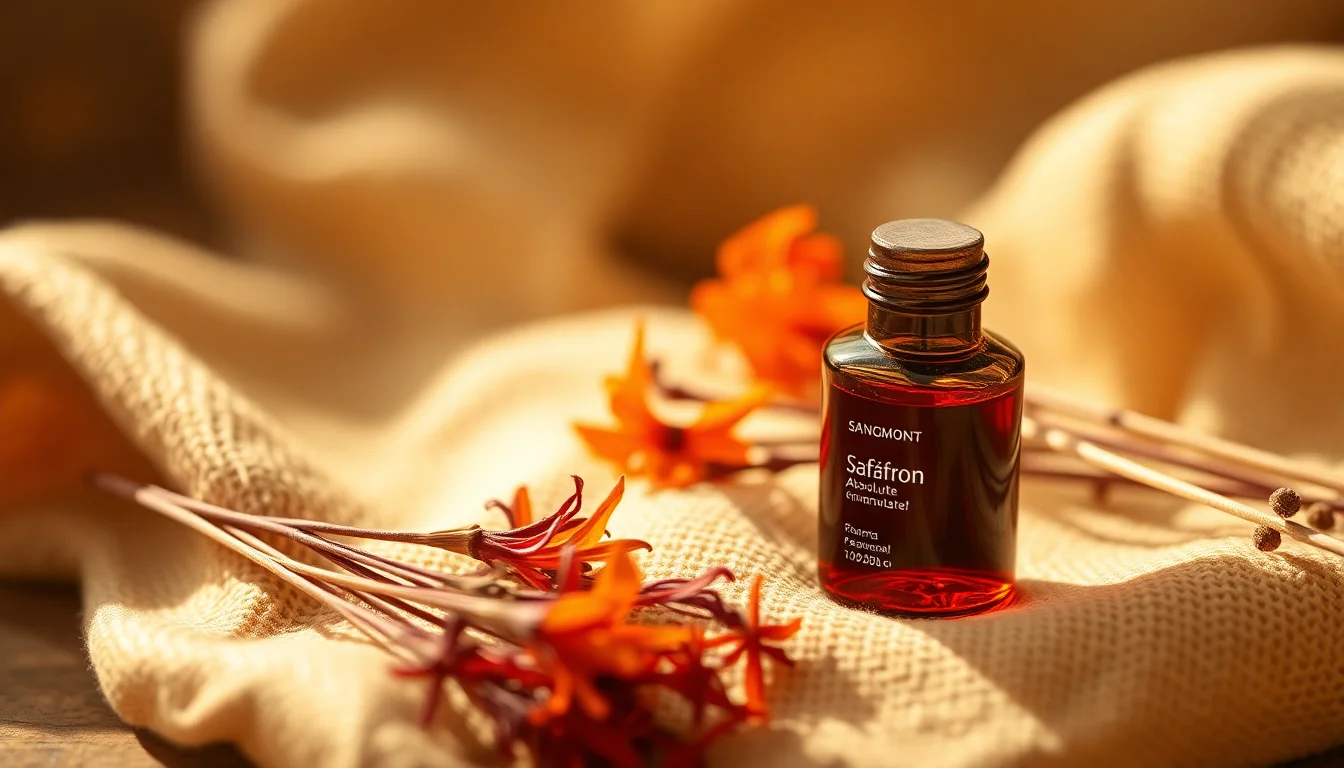
Saffron absolute is a luxurious fragrance material extracted from the stigmas of Crocus sativus flowers. It’s encountered in high-end perfumes and gourmet flavorings. This golden-red extract carries the essence of one of the world’s most precious spices. Its rarity and complex aroma profile make it a prized ingredient in niche perfumery, adding warmth, depth, and an unmistakable exotic character to fragrances.
Safety Profile
USE WITH AWARENESS
What Does Saffron Absolute Smell Like?
Saffron absolute unfolds with an intense, honeyed floral warmth reminiscent of sun-baked hay and antique leather. The top notes carry a slightly medicinal, phenolic edge that quickly mellows into a rich, earthy sweetness. As it evolves, deep leathery facets emerge alongside delicate floral undertones of violet and iris. The dry-down reveals a persistent ambery warmth with subtle animalic nuances, creating a luxurious trail that lingers for hours. Its character bridges the gap between floral elegance and oriental opulence.
Scent Profile
In Famous Fragrances
Fragrance associations may not reflect actual formulations.
Showcases saffron’s warm, spicy facets paired with creamy sandalwood, creating a comforting yet exotic gourmand-woody composition where the saffron adds both depth and brightness.
Uses saffron to provide a luminous, slightly metallic edge that cuts through the sweetness of ambergris and woods, creating its signature ‘burning sugar’ effect.
A bold, minimalist interpretation where saffron’s leathery facets are amplified with synthetic notes to create a modern, almost industrial take on this ancient material.
Saffron adds a regal warmth to the citrus top notes and woody heart, creating a luxurious bridge between freshness and depth in this royal-inspired composition.
Highlights saffron’s floral potential by pairing it with jasmine and orange blossom, creating a sparkling yet warm floral-oriental hybrid.
Chemistry, Properties & Perfumer Guide
The Chemistry
Saffron absolute contains over 150 volatile compounds, with safranal (a monoterpene aldehyde) being the primary odor-active component. Other key constituents include picrocrocin (responsible for the bitter taste) and crocins (water-soluble carotenoids that provide the intense yellow color). The absolute is typically obtained through solvent extraction of the dried stigmas, yielding a viscous, reddish-brown liquid. Modern analytical techniques have identified numerous norisoprenoids and oxygenated terpenes that contribute to its complex olfactory profile. The chiral nature of many saffron components contributes to its distinctive stereochemical fingerprint.
Chemical Composition
Physical & Chemical Properties
| Appearance | Viscous reddish-brown liquid |
|---|---|
| Solubility | Soluble in alcohol, oils; insoluble in water |
| Flash Point | >100 °C |
Key Constituent Properties
| Constituent | CAS | MW | BP °C | XLogP | Vapor P. |
|---|---|---|---|---|---|
| Safranal | 116-26-7 | 150.22 | 70 °C (0.1 mmHg) | 2.3 | 0.1 mmHg at 25 °C |
| Picrocrocin | 138-55-6 | 330.37 | Decomposes | -1.9 | Negligible |
Perfumer Guide
| Application | Typical % | Range | Notes |
|---|---|---|---|
| Fine Fragrance | 0.1-0.5% | Up to 1% | Used sparingly due to potency |
| Personal Care | 0.01-0.1% | Up to 0.2% | Primarily in prestige products |
| Functional Fragrance | 0.001-0.01% | Up to 0.05% | Used for warm, luxurious notes |
Classic Accords
+ Vanilla + Tonka = Gourmand Luxe
+ Leather + Tobacco = Vintage Elegance
Tip: Use saffron absolute as a bridge note between citrus top notes and woody base notes to create seamless transitions.
Alternatives & Comparisons
The primary aromatic component of saffron, offering a cleaner, more focused saffron character without the full complexity of the absolute.
Provides similar warm, floral-woody facets with greater stability in formulations requiring longer shelf life.
A reconstituted saffron base that offers cost-effective saffron character for applications where authenticity is less critical.
Safety, Regulatory & Sustainability
⚠ Regulatory Disclaimer
General reference only. IFRA, REACH, EU Cosmetics Regulation standards update periodically. Consult current IFRA Standards Library before formulating. Not legal or regulatory advice.
IFRA Status
No IFRA restrictions. Listed as safe when used within typical concentrations.
EU Allergen Declaration
None declared under EU Cosmetics Regulation No 1223/2009.
RIFM Assessment
Recognized as safe for current use levels based on RIFM’s comprehensive safety assessment.
Sustainability
Saffron cultivation is labor-intensive, requiring hand-harvesting of stigmas from about 150,000 flowers per kilogram. Sustainable sourcing initiatives focus on fair trade practices and water conservation in growing regions. The absolute’s high value encourages careful use and minimal waste. Some perfumers are exploring biotechnology approaches to produce key saffron aroma molecules sustainably.
Explore Saffron Absolute
Browse essential oils and aroma compounds.
Affiliate disclosure: we may earn a small commission at no extra cost to you.
Industry & Science Data
References
- Carmona et al. (2006). Chemical composition of saffron. Journal of Agricultural and Food Chemistry. PMID 16417309
- Raina et al. (1996). Saffron: chemical composition. Food Reviews International. DOI 10.1080/87559129609541091
Data: PubChem (NIH), PubMed, RIFM, IFRA. Last reviewed: Mar 2026.
Ingredient Data Sheet
CAS 8022-20-6Physical data: PubChem (NIH/NLM), U.S. EPA CompTox Dashboard, EPA OPERA models, RDKit. Odor & flavor: Arctander (Perfume & Flavor Chemicals), Fenaroli's Handbook of Flavor Ingredients, Leffingwell. Thresholds: van Gemert (Compilations of Odour Threshold Values). Regulatory: IFRA Standards 51st, FEMA GRAS. Trade names: Surburg (Common Fragrance & Flavor Materials). All data compiled and cross-referenced for perfumertools.com.
Related Research
- Cellulose (CAS 9004-34-6) — Citrus None Note Fragrance Ingredient
- Juniper, Juniperus virginiana, ext., epoxidized (CAS 100209-33-4) — Woody Top to Middle Note Fragrance Ingredient
- 2-Methylbutyl 3-methylbutanoate (CAS 2445-77-4) — Sweet Top Note Fragrance Ingredient
- Cardamom Oil (CAS 8000-66-6) — Spicy Heart Note Fragrance Ingredient

![Bicyclo[3.1.1]heptane-2-ethanol, 6,6-dimethyl- (CAS 4747-61-9) — Woody Middle Note Fragrance Ingredient](https://thegoodscents.company/wp-content/uploads/2026/04/bicyclo-3-1-1-heptane-2-ethanol-6-6-dimethyl-1-1-768x439.webp)