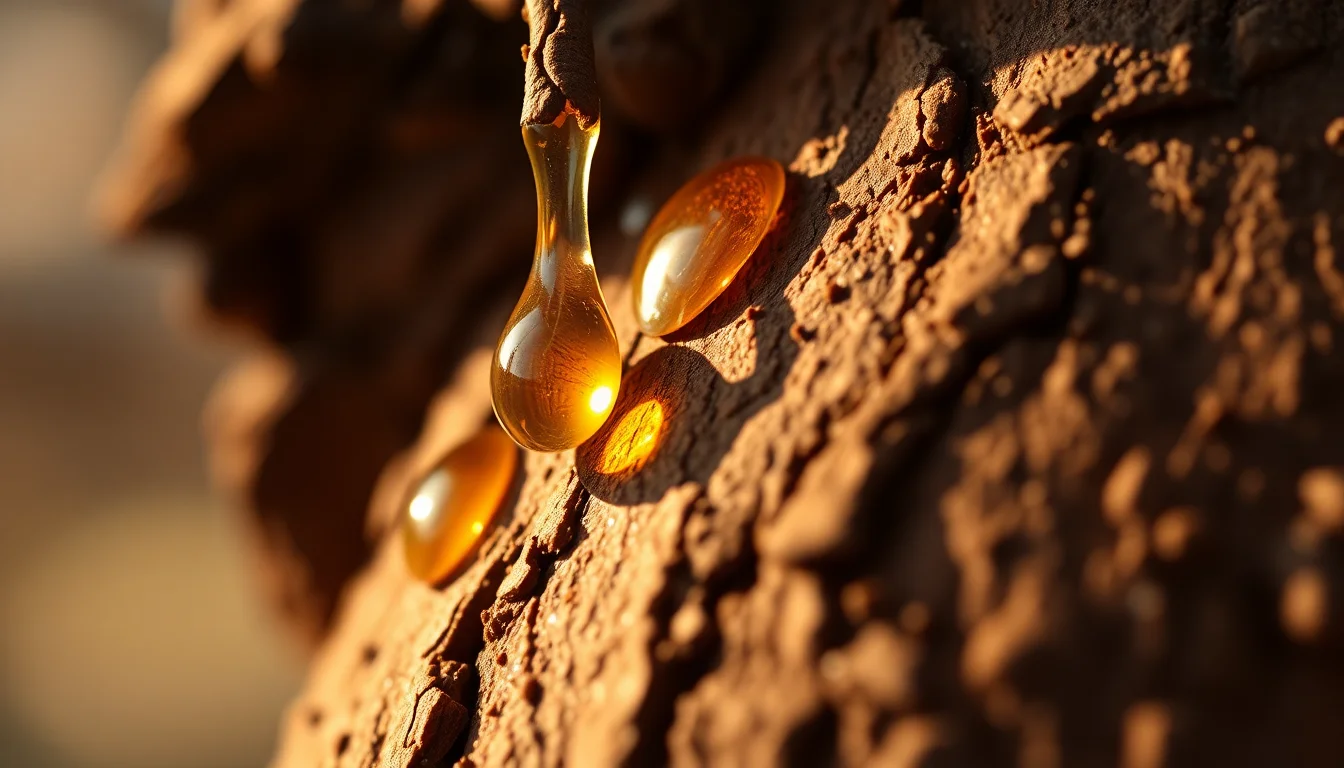
Peru Balsam Oil (CAS 8007-00-9) — Balsamic Base Note Fragrance Ingredient
Peru Balsam Oil
CAS 8007-00-9
What Is Peru Balsam Oil?
Peru Balsam Oil is a warm, vanilla-like resin obtained from the Myroxylon balsamum tree in Central America. You’ll encounter it in oriental perfumes, soaps, and candle fragrances for its rich, comforting aroma. This balsam matters because it adds deep sweetness and longevity to fragrances, serving as a natural fixative that helps other notes last longer on the skin.
Safety Profile
USE WITH AWARENESSWhat Does Peru Balsam Oil Smell Like?
Peru Balsam Oil unfolds like liquid amber – initially sharp with a medicinal edge that quickly mellows into a velvety embrace of vanilla, cinnamon, and dried fruits. The heart reveals a complex dance between smoky benzoin and caramelized sugar, while the dry-down lingers for hours as a skin-warm balsamic whisper. Unlike synthetic vanillins, it carries a resinous depth reminiscent of aged cognac barrels and antique wooden drawers lined with dried herbs.
Scent Profile
In Famous Fragrances
Fragrance associations may not reflect actual formulations.
Peru Balsam provides the signature amber-vanilla foundation, blending with citrus top notes to create Shalimar’s legendary oriental structure. Its resinous quality prevents the vanilla from becoming overly gourmand.
Used here for its smoky facets, Peru Balsam bridges the spice accord to the woody base, adding narcotic warmth that defines this controversial oriental.
The balsam’s medicinal edge cuts through the heavy spice blend, while its vanilla-like sweetness tempers the animalic notes in this pioneering bath oil-turned-perfume.
One of the earliest uses of Peru Balsam in modern perfumery, where it lends a sweet resinous counterpoint to Jicky’s daring lavender-coumarin accord.
Peru Balsam helps ground Angel’s candy-like ethyl maltol with woody depth, preventing the fragrance from becoming cloying despite its extreme sweetness.
Chemistry, Properties & Perfumer Guide
The Chemistry
Peru Balsam Oil is a complex natural mixture containing approximately 50-60% benzyl cinnamate and benzyl benzoate, with smaller amounts of vanillin, nerolidol, and various terpenes. The resin is obtained by scorching the tree bark, causing the balsam to exude – a process called ‘tapping’ similar to rubber production. Modern extraction uses solvents to obtain a cleaner product. The characteristic vanilla-like aroma comes from trace vanillin and related phenolic compounds formed during the tree’s wound response.
Chemical Composition
Physical & Chemical Properties
| Appearance | Dark brown viscous liquid |
|---|---|
| Boiling Point | 300 °C (approx) |
| Density | 1.14-1.17 g/cm³ |
| Solubility | Soluble in alcohol, insoluble in water |
| Refractive Index | 1.567-1.579 |
Key Constituent Properties
| Constituent | CAS | MW | BP °C | XLogP | Vapor P. |
|---|---|---|---|---|---|
| Benzyl cinnamate | 103-41-3 | 238.28 | 300 | 3.6 | 0.0001 mmHg |
| Benzyl benzoate | 120-51-4 | 212.25 | 323 | 3.1 | 0.0003 mmHg |
| Vanillin | 121-33-5 | 152.15 | 285 | 1.2 | 0.01 mmHg |
Perfumer Guide
| Application | Typical % | Range | Notes |
|---|---|---|---|
| Fine Fragrance | 1-3% | Up to 5% | IFRA restricted in leave-on products |
| Soap | 0.5-2% | Up to 3% | Adds long-lasting sweetness |
| Candles | 3-5% | Up to 8% | Excellent throw and tenacity |
| Incense | 5-10% | Up to 15% | Traditional base note |
Classic Accords
Tip: Warm to 40°C before measuring to improve pipetting accuracy of this viscous material.
Alternatives & Comparisons
A lighter, more floral balsam from Colombia with similar fixative properties but less vanillic character. Prefer when needing more transparency in the base.
The major constituent isolated. Provides similar tenacity without the color or variability of natural balsam. Lacks complexity but more stable in white products.
When only the vanilla facet is needed at higher concentrations. More potent but lacks the woody-resinous depth of the full balsam.
Safety, Regulatory & Sustainability
⚠ Regulatory Disclaimer
General reference only. IFRA, REACH, EU Cosmetics Regulation standards update periodically. Consult current IFRA Standards Library before formulating. Not legal or regulatory advice.
IFRA Status
IFRA 49th Amendment restricts to 6.5% in leave-on products (cat 1-11) due to benzyl benzoate and cinnamate content. No restrictions in rinse-off or home care.
EU Allergen Declaration
Contains benzyl benzoate and cinnamate – must be declared above 0.001% in leave-on, 0.01% in rinse-off products per EU Regulation No 1223/2009.
GHS Classification
RIFM Assessment
RIFM safety assessment confirms current IFRA restrictions are adequate for consumer safety when guidelines are followed.
Sustainability
Wild-harvested from Central American rainforests, primarily El Salvador where it’s a protected species. Ethical sourcing programs ensure trees aren’t over-tapped. Some producers now use vacuum distillation rather than traditional bark-scorching methods to improve yield and tree survival rates. Synthetic alternatives reduce pressure on wild stocks for mass-market applications.
Explore Peru Balsam Oil
Browse essential oils and aroma compounds.
Browse on iHerb →Affiliate disclosure: we may earn a small commission at no extra cost to you.
References
- Arctander, S. (1960). Perfume and Flavor Materials of Natural Origin.
- IFRA Standards Library – Amendment 49 IFRA Website
- Tisserand, R. (2014). Essential Oil Safety, 2nd Edition.
Data: PubChem (NIH), PubMed, RIFM, IFRA. Last reviewed: Mar 2026.
Report a data errorIngredient Data Sheet
CAS 8007-00-9Odor & Flavor
| Peru balsam consists of the bark exudate obtained from large trees (up to 15 m or 49 ft high) growing in a rather limited area of Central America (El Salvador). The name Peruvian balsam therefore is a misnomer. The balsam is collected by two methods: (1) By partially burning the bark, which permits its easy removal after a few days. The bark fragments then are immersed in hot, boiling water and the oozed balsam is collected at the bottom of the containers. (2) By wrapping a cloth around incisions made in the bark. The cloth, impregnated with balsam, is then boiled to separate the product. Finally, the residual water is removed from the balsam by direct heating. The balsam is an oleoresin containing 25 to 30% resinous material and 60 to 65% essential oil. Peru balsam has a sweet, delicate, lasting odor reminiscent of vanilla and a bitter taste. The part used is the balsam (oleoresin). Derivatives: Resinoid, prepared by extraction of the resin using voaltile solvents (benzene, alcohol)📖 Fenaroli |
Regulatory Status
| IFRA Listed | Yes — see IFRA Standards for category limits⚖️ IFRA 51 |
| IOFI Classification | Natural📖 Fenaroli |
Physical data: PubChem (NIH/NLM), U.S. EPA CompTox Dashboard, EPA OPERA models, RDKit. Odor & flavor: Arctander (Perfume & Flavor Chemicals), Fenaroli's Handbook of Flavor Ingredients, Leffingwell. Thresholds: van Gemert (Compilations of Odour Threshold Values). Regulatory: IFRA Standards 51st, FEMA GRAS. Trade names: Surburg (Common Fragrance & Flavor Materials). All data compiled and cross-referenced for perfumertools.com.
Related Research
- Hydroxynonanoic acid, delta-lactone (CAS 3301-94-8) — Sweet Middle Note Fragrance Ingredient
- Calcium chloride, dihydrate (CAS 10035-04-08) — Citrus None Note Fragrance Ingredient
- Tetrahydro-.alpha.-pentylfurfuryl acetate (CAS 67634-08-06) — Sweet Middle Note Fragrance Ingredient
- Dextrin (CAS 9004-53-9) — Citrus None Note Fragrance Ingredient